

Why ERP Matters for Supply Chain Management in Today’s Business Landscape
In a rapidly evolving global market, supply chain management must become more agile, intelligent, and resilient. To achieve this, businesses need a system that not only coordinates supply chain tasks but also integrates them with finance, sales, and customer service. This is where the relationship between ERP and SCM becomes strategic.
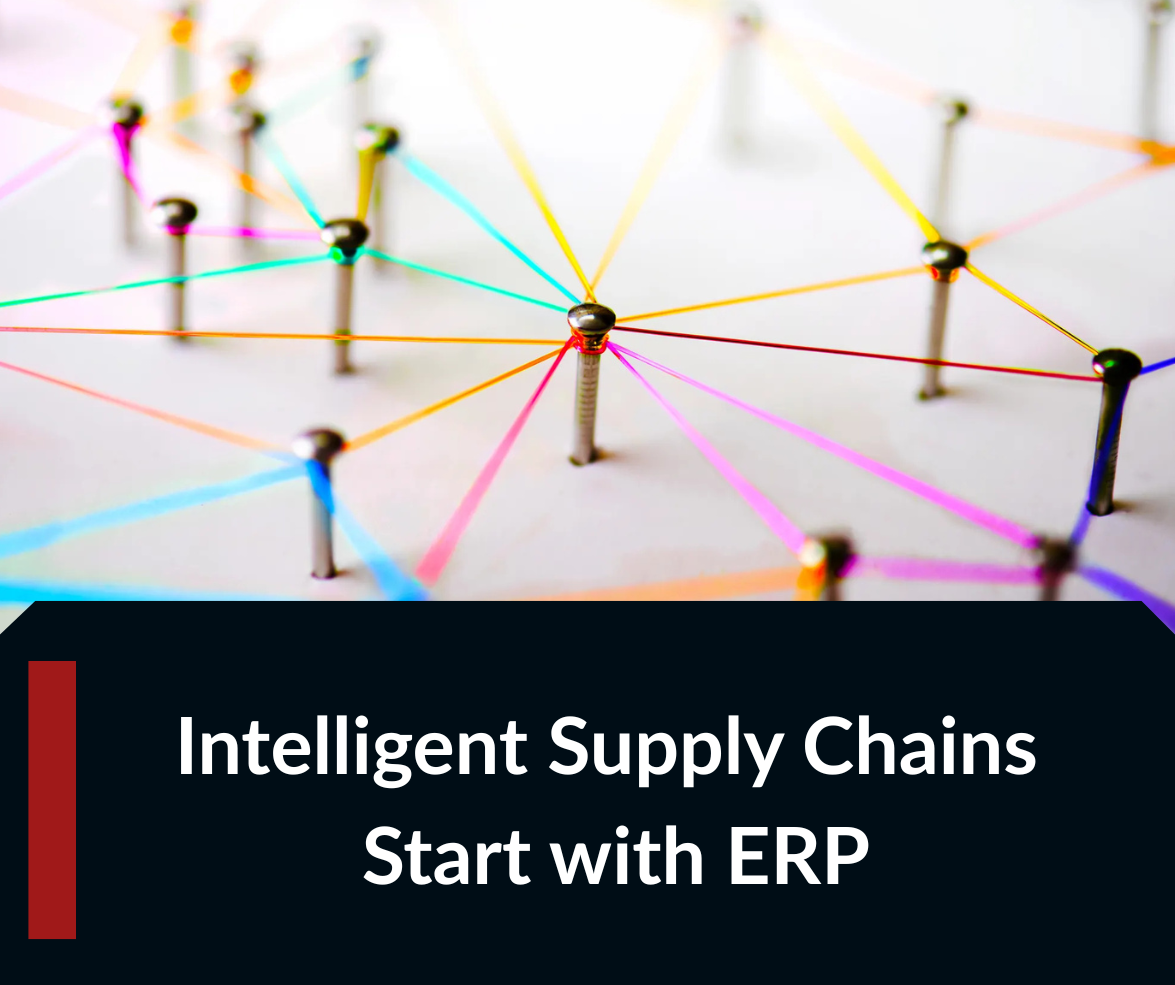
What is ERP and how does it enhance SCM?
ERP systems unify key business processes across an organisation, creating a single source of truth and enabling seamless data flow across departments. Within supply chain management, this integration brings full visibility, real-time control, and data-driven decision-making.
Rather than operating as isolated tools, ERP and SCM solutions work together to synchronise workflows, aligning procurement, manufacturing, logistics, and customer fulfilment with company-wide goals.
Differences between ERP and traditional SCM tools
While both aim to improve supply chain performance, they differ in scope:
- Focus of functionality: traditional SCM systems specialise in planning and execution within the supply chain. ERP goes further by connecting supply chain processes with finance, HR, and other functions.
- Scope of data: ERP consolidates data across the entire business, ensuring consistency and accuracy.
- Collaboration: ERP enables cross-department coordination and breaks down siloed operations.
Key ERP capabilities that boost supply chain performance
- Supply chain planning: ERP uses historical data and predictive analytics to forecast demand, helping businesses balance inventory, optimise resources, and reduce waste. AI-powered scenarios help anticipate risks and opportunities. See also: SAP Integrated Business Planning (IBP).
- Procurement management: centralised vendor and purchase order data gives better control over supplier negotiations, delivery schedules, compliance, and costs.
- Manufacturing coordination: ERP synchronises production schedules with inventory and orders, reducing lead times and production costs.
- Product development alignment: linking development decisions with supply chain data helps designs meet market needs while optimising material usage.
- Logistics and inventory visibility: real-time insight into stock levels and delivery status enables smarter warehouse planning, better routing, and fewer delays.
- Maintenance and sustainability: ERP supports preventive maintenance planning and tracks environmental metrics to support sustainability goals.
- Customer service and financial integration: connected ERP systems improve order accuracy, delivery transparency, and financial reporting, enhancing the overall customer experience.
Strategic benefits of integrating ERP in SCM
- Collaborative decision-making: ERP improves communication across teams and stakeholders.
- Expanded visibility: cross-functional data provides clarity into every stage of the supply chain.
- Operational efficiency: automated processes reduce manual work and errors.
- Scalability and resilience: ERP systems adapt to growth and shifting market conditions.
- Cost optimisation: end-to-end visibility helps identify and eliminate inefficiencies.
Deep manufacturing expertise with SAP ERP
Beyond implementation, TDI APJ brings industry expertise across a wide range of manufacturing sectors, including steel and metals, food and beverage, pharmaceuticals, industrial manufacturing, chemicals, and consumer products.
With hands-on experience from complex SAP projects, TDI APJ understands the operational, regulatory, and scalability challenges manufacturers face in each industry. Using SAP best practices and industry frameworks, we help manufacturers optimise production planning, streamline supply chain operations, and improve asset management across the value chain.
Our approach combines industry-specific SAP solutions such as SAP Cloud ERP, cloud architecture, and data-driven insights. As a result, by aligning ERP with manufacturing execution (MES) and supply chain processes, TDI APJ helps organisations build resilient, future-ready operations. Read more: how manufacturers drive business impact through digital transformation.
About TDI APJ
TDI APJ is a trusted SAP partner delivering SAP ERP solutions for enterprises in Vietnam, Malaysia, and Singapore. With experience across Asia Pacific and Japan, we help businesses accelerate digital transformation, optimise operations, and achieve sustainable growth.
Contact TDI APJ or email marketing@tdiapj.com to discuss your project.