

What Is Fit-to-Standard? Why SAP Cloud ERP Favors Standard Processes
Fit-to-standard is a way to implement SAP Cloud ERP using built-in standard processes, instead of customizing the system to match old ways of working. SAP Cloud ERP was formerly known as SAP S/4HANA Cloud Public Edition. For many companies, “limited customization” sounds like a drawback. However, real projects show the opposite. This article explains what fit-to-standard is, how it works and what it takes to succeed.
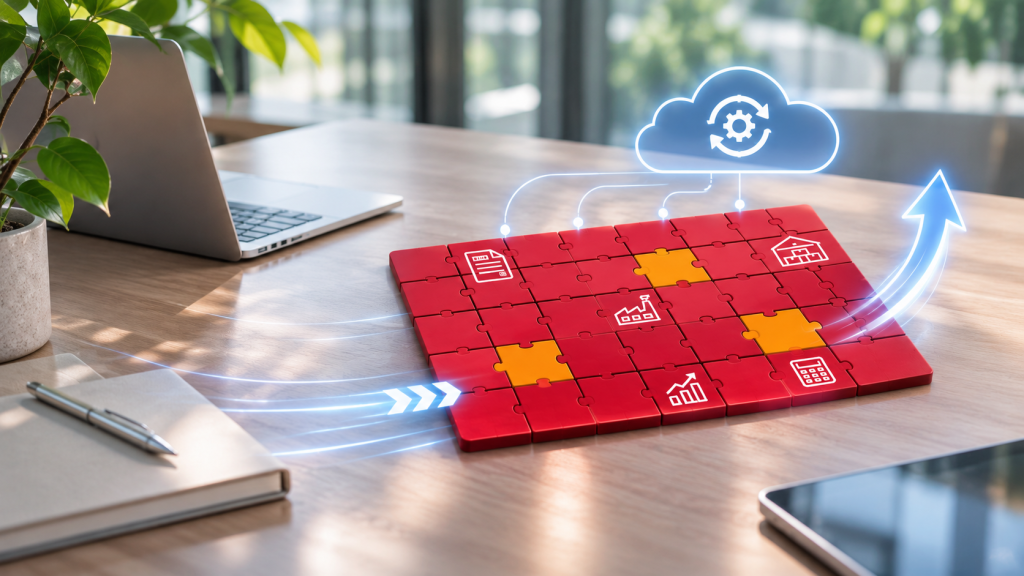
What is fit-to-standard?
Fit-to-standard is a method for comparing a company’s processes with the standard processes in SAP. It is part of SAP Activate, SAP’s implementation framework.
The comparison happens in workshops during the Explore phase. In each workshop, consultants demonstrate the standard process live in the system. Then business users compare it with how they work today. The goal is to confirm that the system supports their real work.
How is fit-to-standard different from a traditional ERP implementation?
A traditional project usually starts by collecting requirements. The company describes its current processes. Then the system is changed to match them.
In contrast, fit-to-standard starts from the standard processes already in the system. Only differences that are truly needed are recorded. According to SAP, each difference is a “requirement” and is managed in SAP Cloud ALM.
In other words, the question changes. Before, it was: “What do we need to change in the system to match how we work?” Now it is: “How far does the standard process go, and what really needs to be different?”
Why does SAP Cloud ERP limit customization?
SAP updates SAP Cloud ERP regularly, so companies always run the latest version. The cleaner the core, the easier each update becomes. As a result, companies do not need to rework custom code after every upgrade. This is also the idea behind the “clean core” approach that SAP recommends.
However, limited customization does not mean no flexibility. Companies can still configure and extend the system when needed. The difference is that every change must have a clear business reason.
Fit-to-standard in real projects: Yamaha and Kajima
At Yamaha Motor Parts Manufacturing Vietnam, the business raised around 40 customization requests. However, almost all were met with SAP standard processes. Only 3 needed custom development. As a result, the full implementation was completed in 11 months.
According to Mr. Kazuo Hosoi, CEO of TDI APJ, leadership commitment was the key:
“Leadership declined custom developments that were not necessary. In addition, the project teams adopted standard best practices. This made a smooth completion possible.”
— Mr. Kazuo Hosoi, CEO, TDI APJ
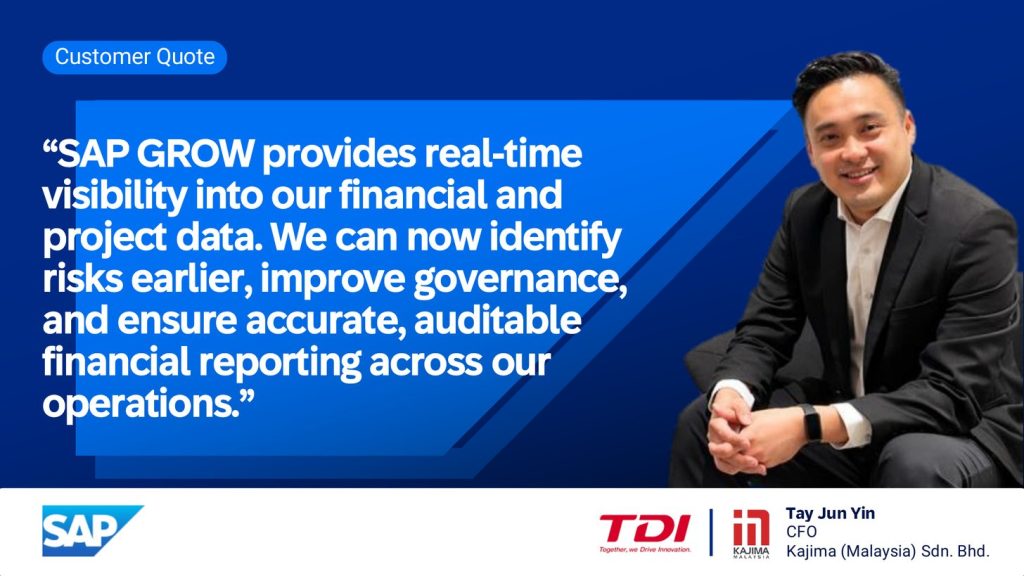
Similarly, Kajima Malaysia implemented SAP Cloud ERP through SAP GROW with TDI APJ. With standard processes, its financial and project data now sit in one system.
“SAP GROW provides real-time visibility into our financial and project data. We can now identify risks earlier, improve governance, and ensure accurate, auditable financial reporting across our operations.”
— Mr. Tay Jun Yin, CFO, Kajima (Malaysia) Sdn. Bhd.
What does fit-to-standard need to succeed?
The method does not work on its own. Companies need two things in place.
First, business users must take part. They know the work best. If they rarely join the workshops, the new processes are hard to adopt after go-live.
Second, leaders must be ready to decide. Workshops often bring different opinions. Therefore, someone with authority needs to choose between keeping the standard and accepting a difference.
Before you start, ask three questions:
- Which processes truly create a competitive advantage and should stay different?
- Which processes are just habits?
- Who decides when departments disagree?
Considering SAP Cloud ERP? Talk to the TDI APJ team to see how fit-to-standard applies to your processes. Learn more about SAP Cloud ERP.
TDI APJ is an SAP Gold Partner with 300+ SAP projects in 15+ countries.
Sources: SAP Learning – SAP Activate and Fit-to-Standard (2025); SAP – SAP Cloud ERP (2026); SAP – Kajima (Malaysia) Customer Quote (2026); TDI APJ – Yamaha Motor Parts Manufacturing Vietnam and Kajima Malaysia projects.