

AI Is No Longer the Question. Business Value Is the Answer.
Over the past few years, AI has become one of the most talked-about topics in the retail industry. From global conferences to boardroom strategy discussions, AI has been at the center of conversations around business growth, operational excellence, and customer experience.
What is even more notable is that the questions businesses are asking have changed.
Instead of asking, “What is AI?”, retailers today are asking far more practical questions:
- How can AI help businesses drive revenue growth?
- How can every technology investment deliver measurable business value?
- Where should businesses begin their AI journey?

The event opened with a comprehensive overview of Vietnam’s retail landscape, highlighting evolving consumer behavior, the rapid growth of omnichannel retail, and increasing competitive pressures. These insights provided valuable market context, helping businesses better understand the industry’s challenges before exploring the role of technology, data, and AI.
These were also the key themes explored throughout Retail Next – Winning in Vietnam’s New Retail Landscape with AI and Data, which brought together retailers, the Vietnam Retailers Association (AVR), SAP, and industry experts to share diverse perspectives on the future of Vietnam’s retail industry.
What made Retail Next unique was not the introduction of another new technology, but the opportunity to bring together diverse perspectives on the same challenge. From retailers navigating growth and operational pressures, to technology leaders, consulting experts, and industry associations, one message stood out: AI creates real business value only when it is built on a foundation of trusted data and standardized business processes.
Vietnam’s Retail Industry Is Entering a New Era
For many years, growth in Vietnam’s retail industry was largely driven by expansion—opening more stores, entering new markets, and increasing the number of retail outlets.
Today, the landscape has changed.
Consumers have more choices than ever before, and shopping behaviors continue to evolve across physical stores, e-commerce platforms, and social commerce channels. At the same time, retailers are facing increasing pressure on profit margins amid intensifying competition and rising operating costs.
In this new environment, growth is no longer simply about selling more.
Success today depends on selling the right product to the right customer, at the right time—while maintaining optimal inventory levels.
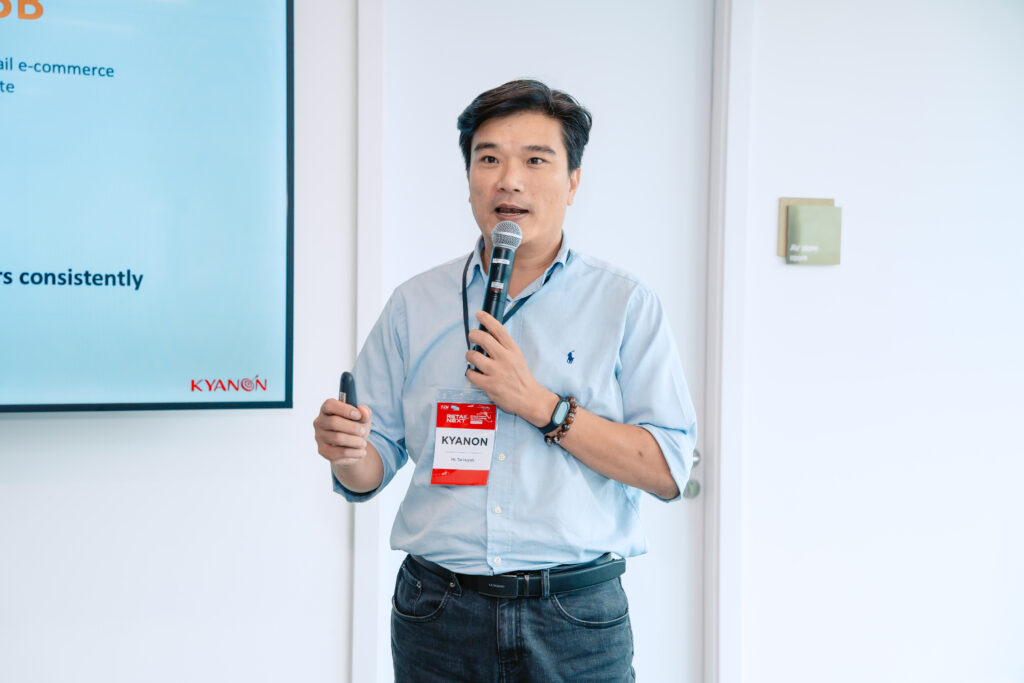
The event opened with a comprehensive overview of Vietnam’s retail landscape, highlighting evolving consumer behavior, the rapid growth of omnichannel retail, and increasing competitive pressures. These insights provided valuable market context, helping businesses better understand the industry’s challenges before exploring the role of technology, data, and AI.
As a result, data has evolved from a reporting asset into a strategic business asset.
Data Has Become the Foundation of AI Success
One of the key messages echoed throughout Retail Next was:
AI doesn’t replace data. It unlocks the value of data.
Many organizations are eager to adopt AI, yet they continue to face fundamental challenges such as fragmented data across ERP, POS, CRM, and warehouse systems, inconsistent business processes, and data that is not yet reliable enough to support AI-driven decisions.
In such environments, AI cannot consistently deliver accurate or reliable results.
Instead of enabling better decisions, AI simply learns from incomplete or unstandardized data.
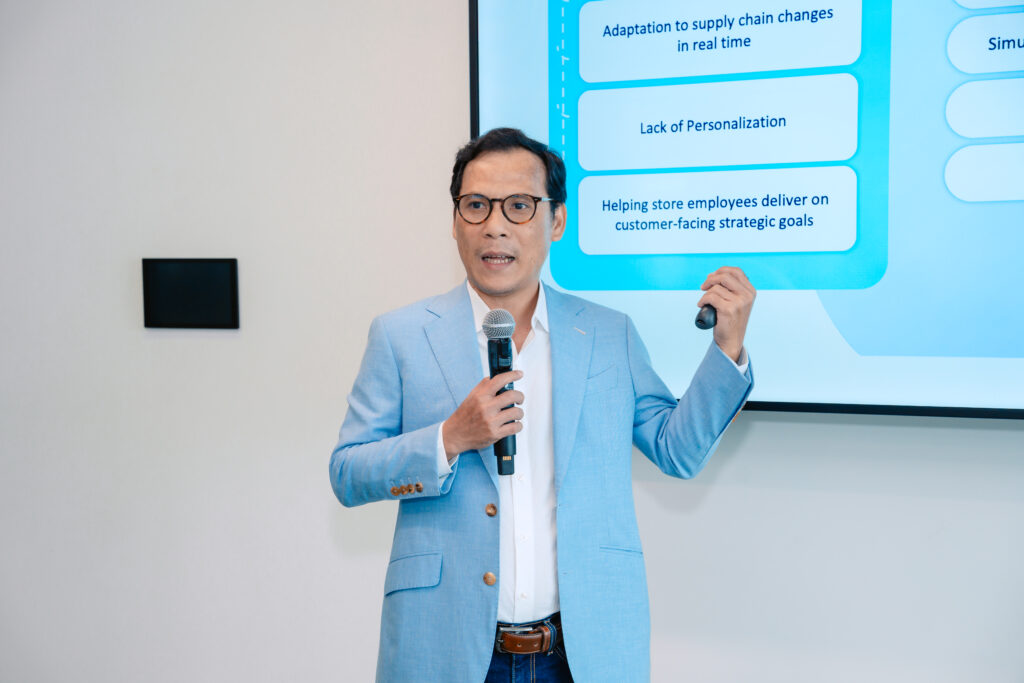
One of the topics that resonated most with attendees was the role of data and standardized business processes in successful AI adoption. Speakers emphasized that AI cannot deliver reliable outcomes when data remains fragmented or business processes lack consistency. This is why many organizations are prioritizing a strong data foundation before scaling their AI initiatives.
This is why organizations that succeed with AI typically begin by standardizing their data and business processes before scaling AI across the business.
Where Is AI Creating Value in Retail?
Unlike a few years ago, when AI was primarily associated with chatbots and content generation, today it is being applied directly to the core operations of retail businesses.
Some of the areas where AI is already delivering measurable value include:
- Demand forecasting: Enabling businesses to predict customer demand more accurately, improving procurement planning, inventory management, and production planning.
- Inventory optimization: Reducing excess inventory, minimizing stockouts, and improving inventory turnover.
- Promotion planning: Analyzing the effectiveness of promotional campaigns to maximize revenue and profitability.
- Customer personalization: Delivering personalized product recommendations and tailored promotions based on each customer’s preferences and behavior.
- Store operations support: Empowering store teams with faster access to information and helping them make better, more informed decisions.
- Real-time analytics: Providing business leaders with real-time insights to monitor performance and respond more quickly to changing market conditions.
The common thread across these applications is that they are not designed to replace people, but to empower them to make faster, more informed decisions.
What businesses need is not more AI.
One key takeaway from Event Retail Next: Businesses don’t invest in AI for the sake of AI. They invest in business outcomes. Business leaders are not concerned with how many AI models are running.
What they care about are measurable business outcomes:
- How much has revenue increased?
- How much has profitability improved?
- How much has the stockout rate been reduced?
- How much has inventory turnover improved?
- Can employees make faster, better-informed decisions?
These are the metrics that truly define the value of digital transformation.
From Technology to Business Value
After years of partnering with retailers on their digital transformation journeys, TDI APJ has observed one consistent pattern: the most successful projects rarely begin with the question, “What technology should we use?” Instead, they start with a clear business challenge that needs to be solved.
- How can we forecast demand more accurately?
- How can we reduce stockouts while maintaining optimal inventory levels?
- How can we shorten decision-making time when business data is scattered across multiple systems?
- How can every technology investment deliver measurable business impact—whether through higher revenue, improved profitability, or greater operational efficiency?
Only after these business objectives are clearly defined can organizations choose the right technology platform, standardize their business processes, and apply AI in ways that deliver measurable business value.
This is why many organizations are shifting their focus from simply implementing AI to building the data foundation and operational capabilities that enable AI to deliver real business value.
With more than 28 years of SAP implementation experience across Vietnam and Southeast Asia, TDI APJ approaches digital transformation by starting with each customer’s business challenges—not technology. By combining SAP, deep retail expertise, and innovations from TDI AI Studio, the goal is not simply to deploy a new system, but to help retailers build an integrated operating foundation, establish trusted data, and enable faster, more confident decision-making in an increasingly dynamic market.
Ultimately, the value of AI is not defined by the sophistication of its algorithms, but by its ability to help businesses make better decisions, respond faster, and deliver measurable business outcomes.
Retail Next Event is only the beginning of the conversation.
Retail Next may have concluded in just one afternoon, but the conversations it sparked are far from over. How can AI deliver real business value instead of remaining just another technology trend? Should organizations invest in data foundations before AI? Which use cases can generate business impact most quickly?
There is no one-size-fits-all answer.
However, one message resonated across nearly every session at Retail Next: competitive advantage in the years ahead will not come from adopting more technology—it will come from turning technology into measurable business outcomes.
If your organization is exploring how to accelerate growth through data and AI in retail, we’d love to continue the conversation. Connect with the TDI APJ team to discuss your business challenges, exchange practical insights, and build a transformation roadmap that turns technology investments into measurable, long-term business value.

Vietnam is emerging as one of Southeast Asia’s leading manufacturing hubs. The continued rise of FDI — particularly from Japan, South Korea, and Europe — has transformed major industrial parks such as Thang Long, VSIP, and Amata into complex manufacturing ecosystems, with dozens of factories operating in parallel. In this context, the pressure for digital transformation (DX) no longer comes from technology trends, but from real competitive demands on the production line.
Vietnam — A New Destination for Global Manufacturing and the Challenge of Digital Operations
Driven by the China+1 strategy, an increasing number of multinational manufacturers have expanded or shifted production to Vietnam. In recent years, the processing and manufacturing industry has consistently attracted the largest share of registered FDI, underscoring Vietnam’s increasingly strategic position in global supply chains.
However, rapid manufacturing expansion also brings significant operational challenges: fragmented data across factories, inconsistent management systems, and a major gap between reports submitted to HQ and the actual situation on the factory floor. This is not an issue faced by a single company — it is a systemic challenge that many FDI manufacturers are currently dealing with.
Cloud ERP and SAP Cloud ERP: The Foundation for Modern Manufacturing Operations
In the wave of manufacturing digital transformation, Cloud ERP — especially SAP Cloud ERP — is emerging as a core solution adopted by leading manufacturing enterprises. Unlike traditional on-premise ERP systems, Cloud ERP enables businesses to:
- Comprehensive visibility: Connect real-time data from the factory floor to management dashboards and HQ reporting.
- Rapid scalability: Deploy across multiple factories and countries on a single platform without duplicating IT infrastructure.
- Seamless ecosystem integration: Integrate seamlessly with IoT, Manufacturing Execution Systems (MES), and other factory operation systems.
- Security and compliance: Meet international security and compliance standards, which are especially critical for Japanese and European manufacturers.
However, successfully implementing Cloud ERP in Vietnam’s manufacturing environment requires more than choosing the right technology. Businesses must address the challenge of “global standards vs. local needs” — balancing process standardization required by headquarters with the operational, legal, and workforce-specific requirements of the Vietnamese market.
2-Tier ERP Model: A Solution for FDI Enterprises
A specific challenge for multinational manufacturing corporations is the 2-Tier ERP architecture: headquarters operates a corporate-level ERP system, often SAP ECC or SAP Cloud ERP, while subsidiary factories in countries such as Vietnam require a more flexible system that fits their scale and local requirements, yet still connects seamlessly with the parent system.
This model has been widely adopted by Japanese and South Korean multinational manufacturers operating FDI factories in Vietnam. When implemented effectively, 2-Tier ERP enables companies to achieve what many consider a difficult balance: maintaining global standardization while preserving local flexibility.
Smart Factory and IoT: The Future Is Getting Closer in Vietnam’s Industrial Parks
Alongside Cloud ERP, the adoption of Smart Factory technologies and the Internet of Things (IoT) in manufacturing is becoming increasingly common across Vietnam’s major industrial parks. Smart sensors on production lines, real-time equipment monitoring systems, and production data analytics are helping manufacturers to:
- Predict equipment failures before they occur, reducing unplanned downtime.
- Monitor product quality at every stage of the production process in real time.
- Optimize energy consumption and material usage based on real-time operational data.
- Build a reliable data foundation for automated reporting to management and headquarters.
Integrating IoT with Cloud ERP—particularly on the SAP platform—is creating a new layer of connected data for manufacturers. From machine and production data to financial information, everything is unified within a single digital ecosystem.
Case Study: Yamaha Motor Parts Manufacturing Vietnam (YPMV)
These trends are no longer just theoretical. Yamaha Motor Parts Manufacturing Vietnam (YPMV), a Yamaha parts manufacturing plant in Vietnam, is one of the FDI manufacturers that has successfully implemented Cloud ERP in a real production environment. Its transformation journey involved integrating multiple systems, balancing the standardization requirements of its Japanese headquarters with local operational needs in Vietnam, and ensuring uninterrupted production throughout the implementation process.
Mr. Hashimoto Muneki, COO of YPMV, directly led this transformation journey — and his story reflects the real challenges faced by hundreds of FDI factories in Vietnam today.
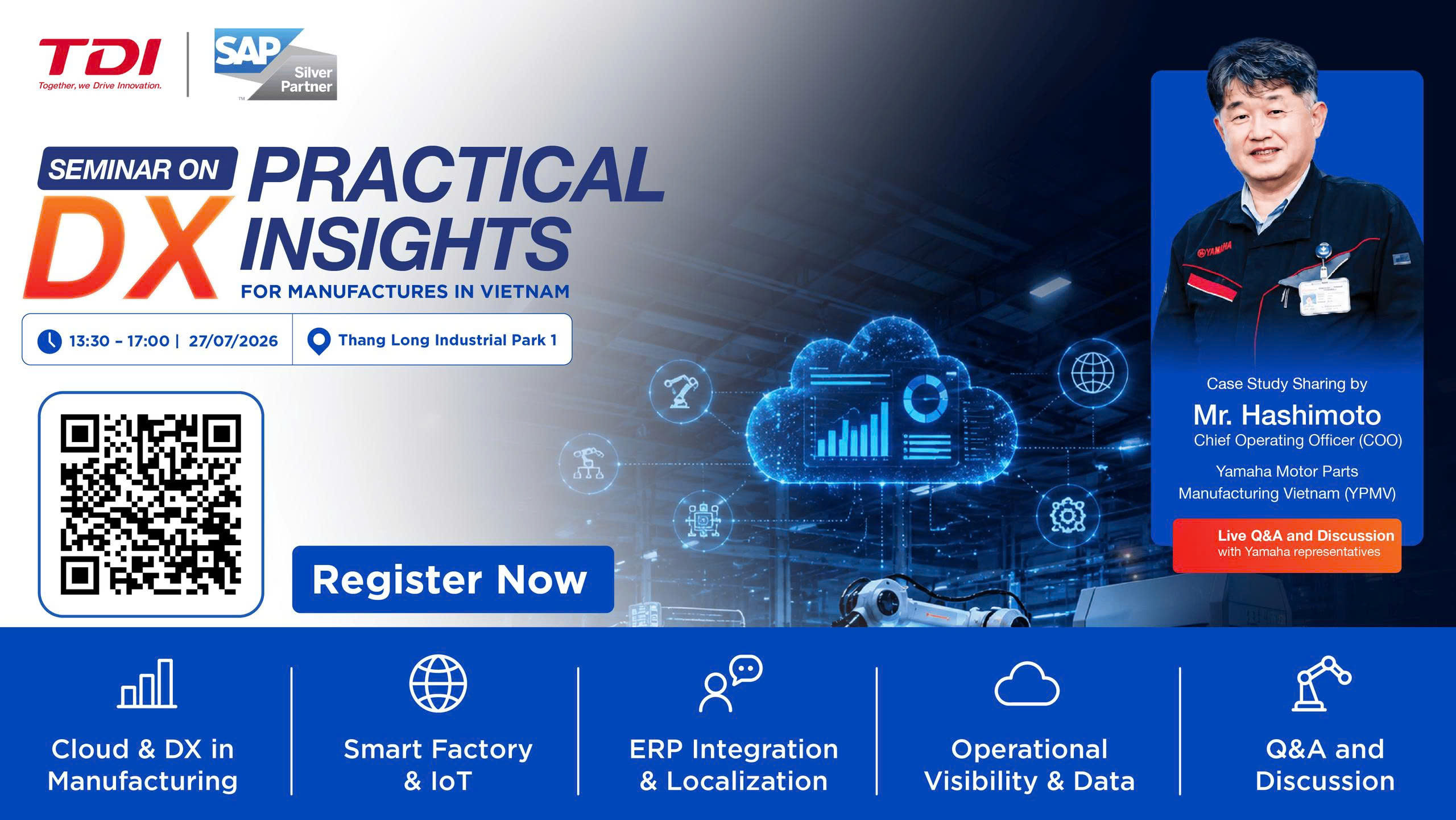
Seminar: Practical DX Insights in Manufacturing | July 2026
To provide a platform for sharing real-world experiences and connecting the manufacturing community, TDI APJ, in collaboration with SAP, is hosting an in-depth seminar on digital transformation in manufacturing, featuring Mr. Hashimoto Muneki and representatives from Yamaha Motor Parts Manufacturing Vietnam (YPMV).
This is an opportunity to engage with professionals who have been through the transformation journey themselves, sharing both the successes and the challenges of implementing digital transformation in a manufacturing environment.
| Event Details 📅 Monday, 27 July 2026 | 2:00 PM – 5:00 PM 📍 Thang Long Industrial Park I (TLIP I), Hanoi 🌐 Japanese–Vietnamese Bilingual Seminar 🔗 Register here: https://luma.com/ne4deedo |
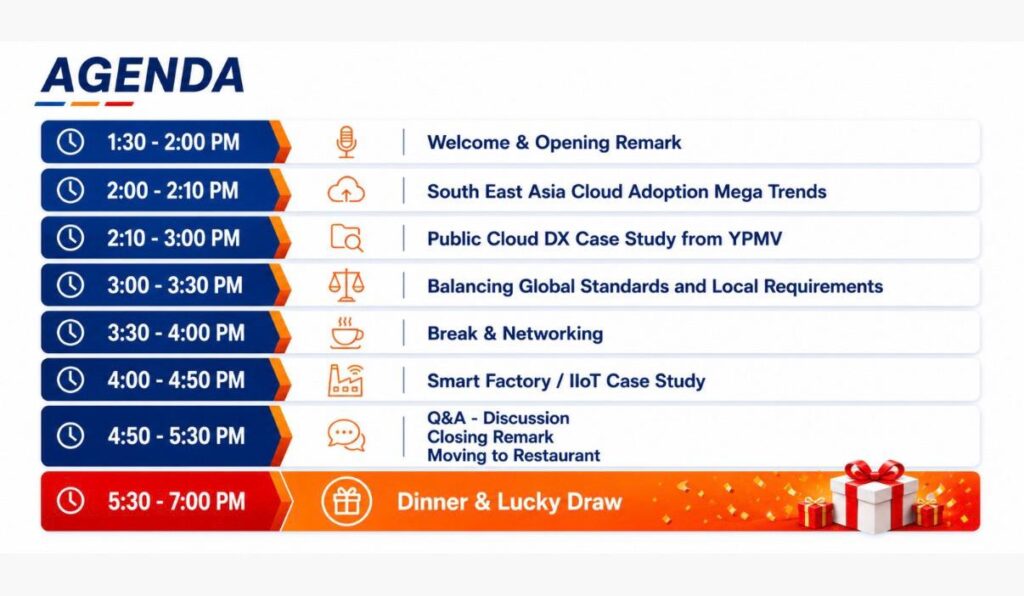
Program Agenda
- DX and Cloud Trends in Southeast Asia
- Case Study: Public Cloud ERP Implementation at YPMV
- The 2-Tier ERP Challenge: Global Standards vs. Local Needs
- Smart Factory & IoT: Trends and Future Applications
- Live Q&A Session with the Speakers
- Networking Dinner & Lucky Draw (Prizes Sponsored by TDI-Sponsored Golfer Fuka Suga)
About TDI APJ
TDI APJ is an SAP ERP consulting and implementation partner serving businesses across Vietnam, Malaysia, and Singapore. Backed by extensive experience delivering SAP projects for FDI manufacturers, TDI APJ provides end-to-end services—from digital transformation consulting and solution design to the implementation and ongoing operation of SAP Cloud ERP in real-world manufacturing environments.
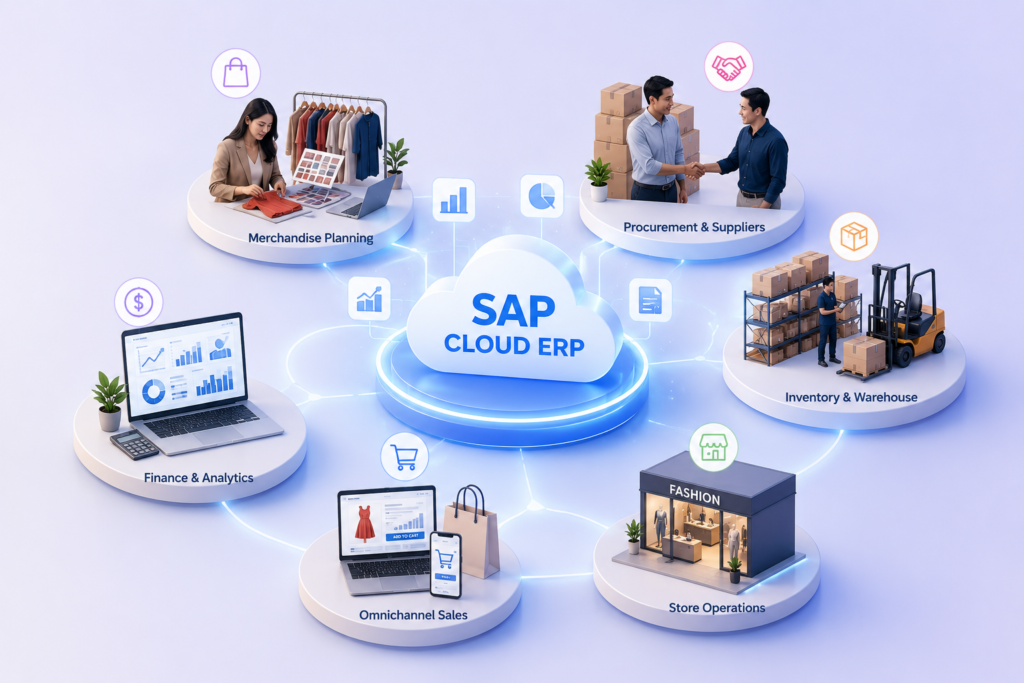
Walk into any retail business today and you’ll likely find the same challenge hiding behind different storefronts.
Sales teams are pushing promotions. Buyers are negotiating with suppliers. Store managers are trying to keep shelves stocked. Finance teams are chasing reports. Meanwhile, customers expect a seamless shopping experience whether they buy online, pick up in store, or walk into a physical outlet.
As retailers grow, these activities become increasingly difficult to coordinate when information is spread across multiple systems, spreadsheets, and disconnected processes.
The result is familiar:
- Products customers want are out of stock.
- Slow replenishment creates missed sales opportunities.
- Finance teams spend days consolidating reports.
- Store managers make decisions based on yesterday’s information instead of today’s reality.
This is exactly why many retailers are moving toward cloud-based ERP platforms such as SAP S/4HANA Cloud Public Edition for Retail.
Retail Success Depends on More Than Sales
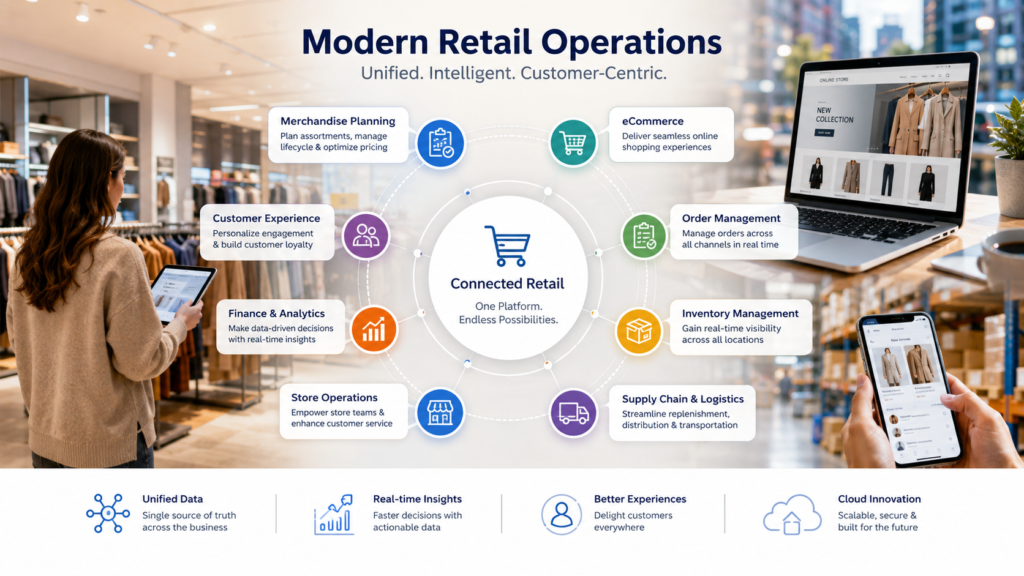
Many ERP discussions begin with finance. In retail, however, success depends on the ability to connect the entire value chain.
A customer purchasing a product online may trigger inventory movements, replenishment requests, procurement activities, warehouse operations, and financial postings—all within minutes.
When these processes are disconnected, every department sees only part of the picture: A buyer may not know which products are selling fastest. A store manager may not know when replenishment stock will arrive. Finance may not see the true profitability of a promotion until weeks later.
Modern retailers need a single platform that allows every department to work from the same source of information.
That is where SAP S/4HANA Cloud Public Edition for Retail delivers value.
From the Buyer’s Desk to the Store Floor
In retail, success often starts long before a customer walks into a store. It begins with the buyer.
Retail buyers are responsible for deciding what products will appear on shelves, which suppliers to work with, and how assortments should evolve to meet changing customer preferences. Their role sits at the intersection of market trends, supplier relationships, pricing strategy, and business profitability.
The challenge is that consumer demand changes quickly. A product that performs well today may become irrelevant next season. At the same time, buyers must balance budget targets, negotiate with suppliers, evaluate product performance, and ensure the right products arrive at the right time.
Without reliable data, many of these decisions rely on fragmented spreadsheets, disconnected reports, and manual coordination across teams.
SAP S/4HANA Cloud Public Edition helps retail buyers make smarter decisions by bringing together product, supplier, purchasing, and sales information in a single platform. Instead of spending time gathering information, buyers can focus on building assortments that match customer demand, improving supplier collaboration, and maximizing profitability.
Ultimately, better buying decisions lead to better product availability, stronger margins, and a more compelling shopping experience for customers.

A customer asks for a product. The item appears available online but the store cannot locate it. Situations like this damage customer trust and create frustration for employees.
With real-time inventory visibility and omnichannel order management, store teams can quickly identify available stock, process fulfillment requests, and provide better service to customers. For retailers, this translates into a smoother shopping experience and fewer lost sales opportunities.
Helping Store Managers Stay Ahead
Store managers sit at the center of daily retail operations. They are responsible for sales performance, inventory availability, promotions, employee productivity, and customer satisfaction.
Yet many managers still spend significant time gathering information from different systems before they can make a decision. SAP provides a unified view of store performance, inventory levels, and operational activities. Instead of reacting to problems after they occur, managers can identify issues early, respond faster, and keep operations running efficiently.
This becomes particularly important during promotions, seasonal campaigns, and peak shopping periods when inventory accuracy can directly impact revenue.
Finance Needs Visibility Too
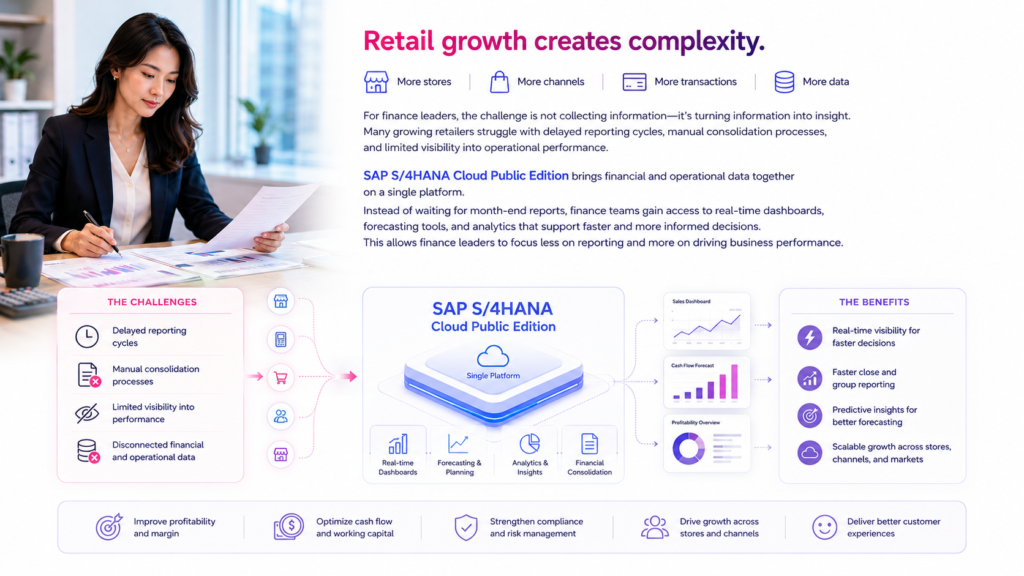
Retail growth creates complexity. More stores, more channels, more transactions, and more data. For finance leaders, the challenge is not collecting information—it’s turning information into insight. Many growing retailers struggle with delayed reporting cycles, manual consolidation processes, and limited visibility into operational performance. SAP S/4HANA Cloud Public Edition brings financial and operational data together on a single platform. Instead of waiting for month-end reports, finance teams gain access to real-time dashboards, forecasting tools, and analytics that support faster and more informed decisions. This allows finance leaders to focus less on reporting and more on driving business performance.
One Connected Retail Journey
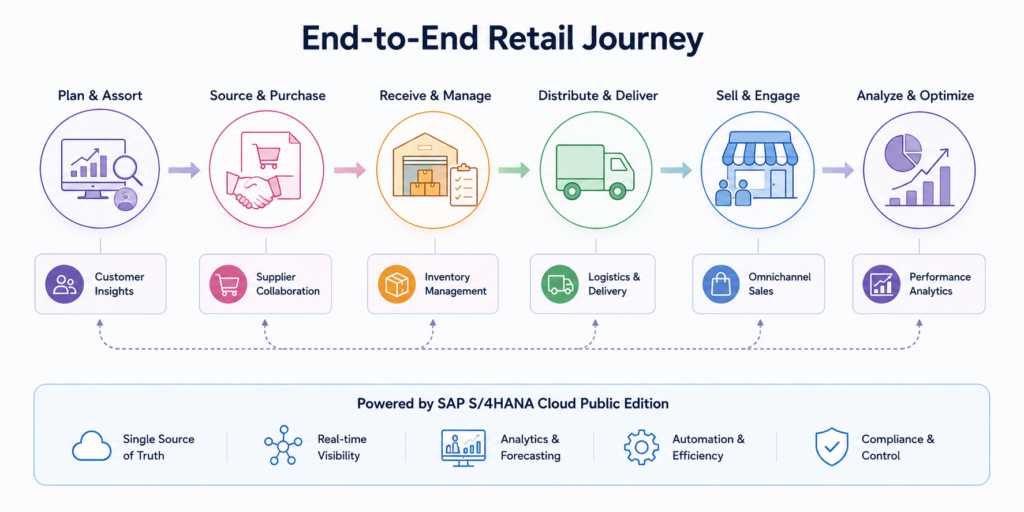
Perhaps the most significant advantage of SAP S/4HANA Cloud Public Edition is not any individual feature. It is the ability to connect the entire retail journey.
Demand signals can automatically trigger replenishment planning. Replenishment activities can drive procurement processes. Inventory movements can update store operations in real time. Sales transactions can immediately feed financial reporting and profitability analysis. Every team works from the same data foundation. Every decision becomes more informed. Every process becomes more connected.
Built on Industry Best Practices
Retailers often worry that ERP implementations require extensive customization. SAP approaches this differently. SAP S/4HANA Cloud Public Edition for Retail comes with pre-configured industry best practices covering merchandise management, procurement, supply chain operations, store management, sales, and finance. This enables retailers to adopt proven processes faster while reducing implementation risk and accelerating time-to-value.
For many organizations, more than 90% of retail requirements can be addressed through standard capabilities. The result is a modern ERP platform that supports growth without introducing unnecessary complexity.
Preparing Retail for the Next Stage of Growth
Retail is becoming increasingly connected, data-driven, and customer-centric. The organizations that succeed will be those capable of turning information into action faster than their competitors. Whether the goal is improving inventory visibility, supporting omnichannel operations, streamlining procurement, or strengthening financial control, SAP S/4HANA Cloud Public Edition provides a foundation for long-term growth.
For retailers looking to modernize operations while adopting proven industry best practices, cloud ERP is no longer simply a technology investment—it is a business transformation strategy.
Why Work with TDI APJ for Your Retail ERP Transformation?
Selecting the right ERP platform is only one part of a successful transformation. Equally important is choosing an implementation partner that understands the realities of retail operations and can translate industry best practices into measurable business outcomes.
TDI APJ is a trusted SAP partner with extensive experience delivering SAP solutions across Asia-Pacific. With more than 100 successful SAP implementations, our team has supported organizations ranging from fast-growing businesses to large enterprises in their digital transformation journeys.
Retail is one of TDI APJ’s key focus industries. Our consultants understand the unique operational requirements across multiple retail segments, including:
- Fashion & Apparel
- Jewelry & Luxury Retail
- Supermarket & Grocery
- Convenience Stores
- Specialty Retail
- Health & Beauty
- Consumer Electronics
- Home & Lifestyle Retail
- Department Stores
- Omnichannel Retail Businesses
Beyond technology implementation, TDI APJ helps retailers redesign processes, adopt industry best practices, improve operational visibility, and build a scalable foundation for future growth. Leveraging SAP S/4HANA Cloud Public Edition, combined with our proven retail implementation methodology and industry expertise, retailers can accelerate time-to-value while minimizing project risk.
Whether your organization is looking to modernize legacy systems, improve inventory visibility, support omnichannel operations, or prepare for expansion, TDI APJ can help guide your transformation journey from strategy through go-live and beyond.
Ready to explore SAP S/4HANA Cloud Public Edition for Retail? Contact TDI APJ to discover how cloud ERP can help your business operate smarter, faster, and more profitably.
Source: https://www.experience-agent.cloud.sap/assets/19462
If you run a mid-to-large fashion or retail business in Asia Pacific, the pressures are familiar: shrinking margins, unpredictable demand, legacy systems that can’t connect your stores and e-commerce, and sustainability reporting requirements that feel impossible to fulfill without clean data.
SAP Cloud ERP is purpose-built to address these problems. But technology is only half the equation. The SAP partner you choose to implement it — their regional expertise, industry depth, and execution capability — determines whether you see results or just get a system.
TDI APJ is an SAP consulting and implementation partner operating across Vietnam, Malaysia and Singapore,with experience deploying SAP Cloud ERP for retail and fashion businesses in the Asia Pacific region.

1. The State of Fashion Retail: Why the Pressure Is Real
The fashion and retail sector is navigating compounding pressures from multiple directions. These are not hypothetical risks — industry research confirms them:
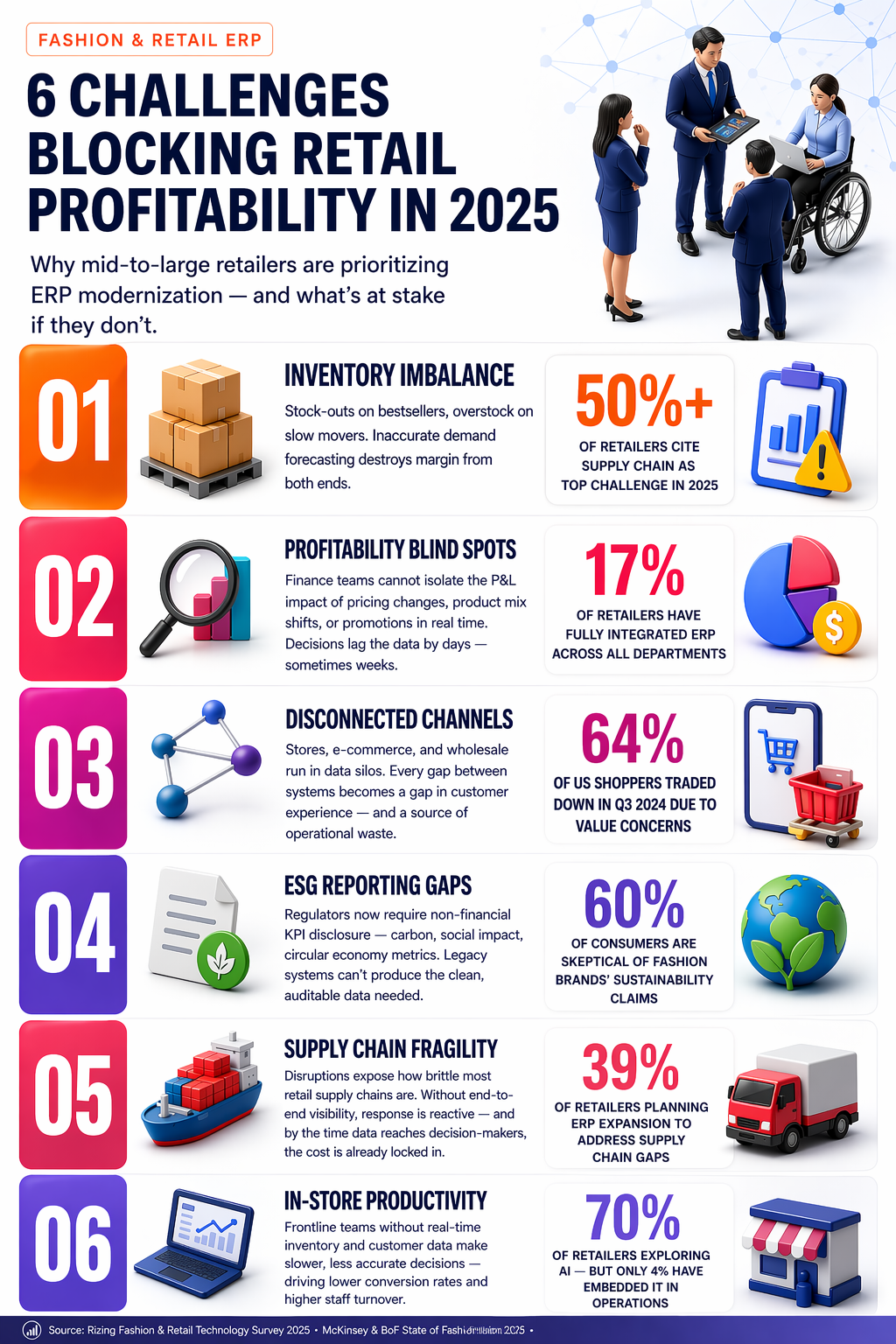
- Consumers are becoming more value-driven: According to the McKinsey & BoF State of Fashion 2025 report, 64% of US shoppers “traded down” in Q3 2024, shifting away from premium clothing to more affordable alternatives. Only 20% of industry leaders expect improvement in consumer sentiment in 2025.
- ERP integration remains incomplete for most retailers: A 2025 industry survey by Rizing found that only 17% of retailers have fully integrated their ERP systems across all departments. Meanwhile, 39% are actively planning ERP expansions — confirming that the majority of the market is still mid-transformation.
- Supply chain volatility is the top external challenge: The same survey found that over 50% of retailers cite supply chain disruptions and economic uncertainty as their top challenges in 2025. Inventory and supply chain management ranked as the #1 investment priority for the year ahead.
- AI is on the agenda but not yet embedded: 70% of retailers say they are exploring AI, but only 4% have embedded it as a core business strategy. The gap between interest and implementation is wide — and the retailers closing that gap first will have a structural advantage.
- Sustainability is now a regulatory issue, not just a brand one: Consumer trust in fashion brands’ sustainability claims is low: research from YouGov shows 60% of global consumers are skeptical of green claims, and 55% report becoming more aware of greenwashing than the year before. Regulators are responding — in 2025, the European Parliament passed new rules requiring apparel producers to cover costs of collecting, sorting, and recycling products.
2. Six Operational Challenges That Directly Impact Margin
Beyond the macro environment, retail and fashion businesses face specific operational pain points that ERP systems are designed to address:
- Inventory imbalance: Inaccurate demand forecasting leads to stock-outs on high-demand products while slow movers accumulate. Both outcomes erode margin.
- Profitability blind spots: Finance teams cannot isolate the P&L impact of pricing changes, seasonal product mix, or promotional spend in real time.
- Disconnected channels: Physical stores, e-commerce, and wholesale operate in data silos — creating friction for customers and operational waste internally.
- ESG reporting gaps: Regulatory pressure to disclose non-financial KPIs (carbon, social impact) is increasing, while legacy systems cannot produce reliable sustainability data.
- Supply chain fragility: Distribution center closures and route disruptions expose how brittle most retail supply chains are when stress-tested.
- In-store productivity: Frontline teams operating without real-time data make slower decisions, contributing to lower conversion rates and higher turnover.
3. Why SAP Cloud ERP Is Built for Retail
SAP Cloud ERP is the market-leading ERP platform for mid-to-large retail businesses. Its advantage over generic ERP platforms is that retail and fashion processes are embedded natively — not added on afterward. For fashion retailers specifically, SAP offers the Retail, Fashion and Vertical Business solution set, covering seasonal assortment planning, markdown optimization, omnichannel order fulfillment, and sustainability tracking.
Key platform capabilities for retail
- Real-time inventory management with commitment-based order confirmation — reducing stock-out risk
- Integrated logistics execution across pick, pack, and ship processes
- Financial close acceleration with granular P&L visibility by channel, product, and region
- AI-driven demand forecasting and trend anticipation
- Native ESG data capture aligned with international reporting standards (CSRD, GRI)
- SAP Customer Checkout (cloud edition) for in-store purchasing integration
- According to SAP Performance Benchmarking, 73% of retailers are prioritizing personalized customer experiences — SAP’s platform enables this at scale
4. Business Outcomes: What SAP Customers Report
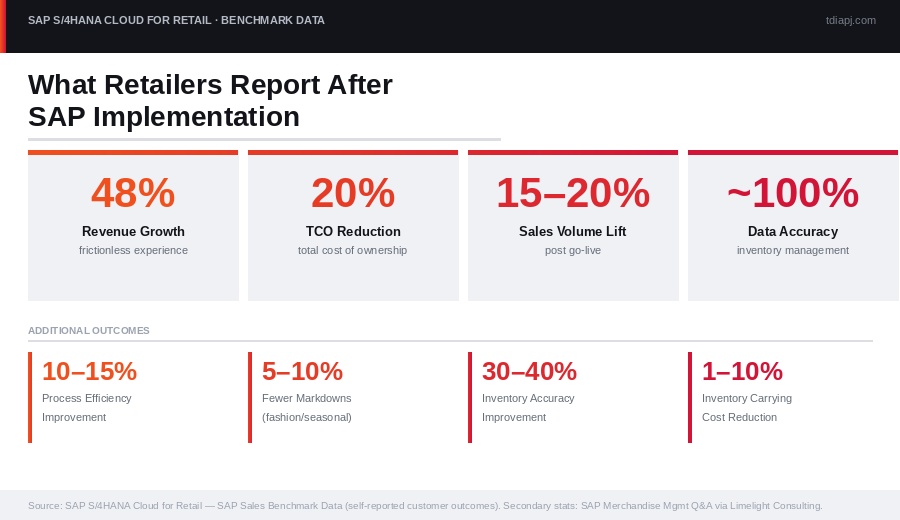
The following outcome ranges come from SAP’s Sales Benchmark Data for the Retail & Fashion vertical. These are self-reported customer benchmarks, not independent research — but they reflect documented implementation results across SAP’s global customer base.
Additional outcome data from SAP’s own product documentation for merchandise management:
- 5–10% fewer markdowns for fashion and consumer electronics retailers through more efficient season management
- 30–40% improvement in inventory accuracy, leading to higher inventory turns
- 10–15% reduction in inventory carrying costs
Independent validation: A Forrester Total Economic Impact study found that organizations implementing SAP S/4HANA experienced an average operational cost reduction of approximately 10% within the first three years.
5. SAP Solutions Relevant to Retail & Fashion
Depending on where a business is in its digital transformation journey, TDI APJ typically implements one or more of the following:
| Solution | What It Addresses |
| SAP S/4HANA Cloud Public Edition | Core ERP: finance, supply chain, operations. Pre-configured for retail. Faster deployment than custom on-premise builds. |
| Retail, Fashion & Vertical Business | Industry-specific modules: assortment management, seasonal planning, markdown optimization, and fashion supply chain. |
| SAP Customer Checkout (Cloud) | Point-of-sale integrated with the ERP — real-time inventory updates and unified in-store experience. |
| SAP Sustainability & ESG | Track, manage, and disclose non-financial KPIs in formats compliant with CSRD, GRI, and other global standards. |
6. Why Your SAP Partner Choice Determines Your Outcome
SAP is the platform. But SAP implementations don’t run themselves. The difference between a successful go-live in months and a multi-year cost overrun is almost entirely determined by your implementation partner.
What separates strong SAP partners for retail:
- Retail-specific expertise. Generic SAP partners configure the system. Retail-specialized partners know the business processes — seasonal planning, markdown logic, omnichannel fulfillment — and configure accordingly.
- Regional presence. Implementation is a people-intensive process. A partner with operations in your market understands local compliance requirements, vendor ecosystems, and change management dynamics.
- Right-sized for your business. Enterprise SAP partners built for Fortune 500 deployments often over-engineer solutions for mid-market retailers.
- Post-go-live commitment. ERP is not a one-time project. The right partner should be invested in your long-term operational performance, not just the implementation contract.
Relevant data point: Prosci research indicates that 70% of change initiatives fail due to lack of proper change management — a risk that is significantly mitigated by partners who integrate change management into the implementation methodology.
7. Why Retail Businesses Choose TDI APJ
- Operating across key Southeast Asian markets including Vietnam, Malaysia, Singapore, and Indonesia, TDI APJ helps businesses leverage regional expertise combined with globally proven SAP implementation methodologies.
- End-to-end SAP consulting and implementation. From business case and solution design through go-live and post-implementation support.
- Industry focus: retail, fashion, and mid-to-large enterprises. Focused practice means faster configuration and implementation teams that understand your business model.
- Backed by TDI Group Japan. TDI APJ operates under a Japanese technology and consulting organization — bringing structured project management and a long-term partnership orientation.
- Aligned with SAP’s current retail roadmap. We deploy SAP’s latest cloud-first product suite: S/4HANA Cloud Public Edition, Retail & Fashion vertical, and SAP’s AI-driven analytics.
Ready to Talk to an SAP Retail Partner?
Tell us about your current systems and business goals. We will map the right SAP solution and outline a realistic timeline for your business.
Contact TDI APJ: marketing@tdiapj.com
The pharmaceutical industry has always operated under pressure. But the pressure today feels different — regulatory requirements are tightening, global supply chains are more fragile than they appear, and the race to bring new therapies to market faster has never been more intense. All at the same time.
For manufacturers and healthcare operators across Asia-Pacific, the question is no longer whether to digitally transform. It is whether the current operational setup can keep absorbing the cost of not doing so.
The Challenges Facing Pharma Today
1. Regulatory Compliance Is Getting More Complex — Not Less
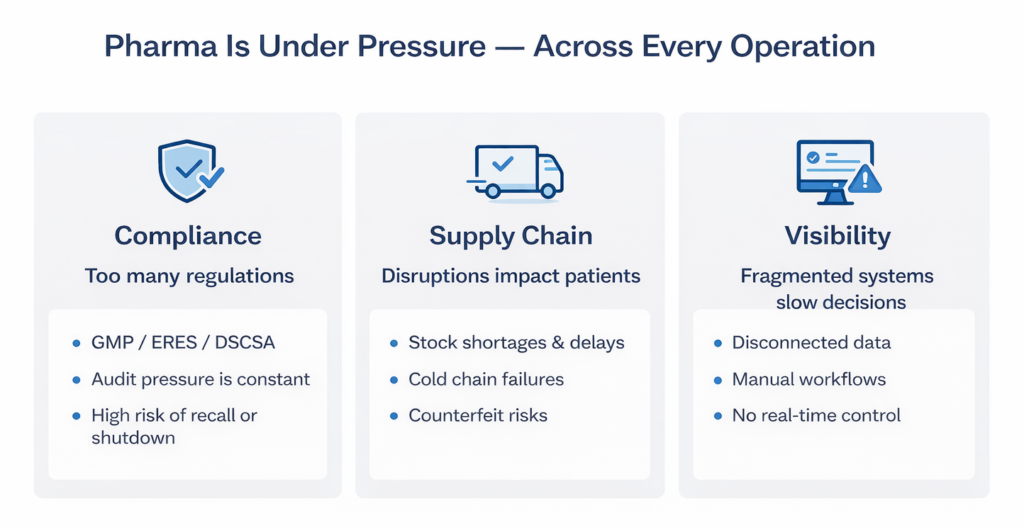
ERES) regulations, GMP standards, serialization mandates such as the EU Falsified Medicines Directive (FMD) and the US Drug Supply Chain Security Act (DSCSA) — these are no longer distant concerns for manufacturers operating in or exporting to regulated markets. They are daily operational realities.
Pharmaceutical compliance violations have cost the industry over $50 billion since 2000. And the risk is not just financial: a gap in the audit trail, an unresolved CAPA, or a batch traceability failure can halt production, trigger a recall, or result in regulatory action.
For companies still relying on paper-based workflows and disconnected systems, audit readiness is a significant operational cost — not a standard outcome.
2. Supply Chain Disruptions Have a Direct Impact on Patients
As the COVID-19 pandemic made clear, pharmaceutical supply chain failures are not just an operational problem — they determine whether the right medicine reaches the right patient on time and at the right quality. Counterfeit drugs, stock shortages, and treatment delays are the real-world consequences of supply chains that lack end-to-end visibility.
The pharmaceutical supply chain spans raw material sourcing, manufacturing, packaging, cold chain logistics, and last-mile distribution. Each stage carries distinct compliance obligations and quality risks. End-to-end visibility, powered by real-time data, enables proactive identification of issues — supplier delays, quality deviations, cold chain excursions — before they escalate. In the case of recalls, it allows rapid identification and removal of affected batches.
Without that visibility, disruptions are discovered reactively — after the impact has already reached operations or patients.
3. AI and Data Are Redefining What’s Possible
Leading pharmaceutical companies are accelerating investment in data, digital, and AI across commercial and operational functions. The use cases are no longer pilots — they are running in live production environments:
Demand forecasting: AI analyzes historical data, market trends, and seasonal patterns to reduce stockouts and overstock — both critical in pharmaceutical operations.
Predictive maintenance: Sensor data from manufacturing equipment is analyzed to anticipate failures before they cause production downtime.
Batch release acceleration: Automated quality checks and digital workflows reduce cycle times and compliance effort — STEMCELL Technologies reported an 86% reduction in time for SAP system validation for GxP guidelines after implementing RISE with SAP (Source: SAP).
Supply chain risk management: AI-driven scenario planning helps companies navigate disruptions before they escalate into production or distribution failures.
The ERP Foundation: Why It Matters More Than Ever
The technologies above — AI, IoT, serialization, real-time analytics — can only deliver value when they run on a solid operational foundation. For most pharmaceutical manufacturers, that foundation is the ERP system.
A modern, cloud-based ERP purpose-built for life sciences integrates batch management, quality management, supply chain, procurement, and financial controlling on a single platform. This means:
- Every production run is traceable from raw material to batch release
- GxP documentation is embedded in workflows, not added after the fact
- Compliance reporting is automated, not manually assembled before audits
- Finance and operations work from the same data, in real time
Without this integration, digital initiatives remain isolated — IoT data in one system, quality records in another, financial reporting in a spreadsheet. The result is a patchwork that fails precisely when it matters most.
What This Means for Manufacturers in Asia-Pacific
The pharmaceutical sector in Asia-Pacific is accelerating in both directions simultaneously. Markets across the region are growing rapidly — driven by rising healthcare demand, aging populations, and increasing consumer spending on health. At the same time, regulatory expectations are rising: GMP standards, serialization requirements, and data integrity obligations are aligning more closely with EU and US benchmarks.
For manufacturers with significant dependence on imported raw materials and APIs, supply chain resilience is not a theoretical concern — it is a strategic priority. Companies that invest now in building a connected operational backbone — from shop floor to regulatory submission — will be positioned to compete on quality, speed, and cost as the market continues to differentiate between those who lead on technology and those who follow.
How TDI APJ Supports Pharmaceutical and Healthcare Companies
At TDI APJ, we implement SAP solutions for pharmaceutical manufacturers and healthcare operators across the Asia-Pacific region — with a consulting team trained and certified in pharmaceutical industry standards.
That means we do not just configure software to technical specifications. We understand how a batch release decision is made, what a CAPA workflow looks like in practice, and where compliance gaps typically surface in a pharmaceutical production environment.
Our implementations cover:
- Batch management and end-to-end serialization
- GMP compliance and quality management
- Manufacturing and production planning
- Clinical and commercial supply chain
- Procurement and supplier quality control
- Warehouse and cold chain management
- Finance, cost control, and audit trail
- Healthcare operations and scheduling
Real-world results show how digital transformation delivers measurable impact in pharmaceutical operations — from faster validation to more efficient system testing.

Key Takeaways
Regulatory compliance and supply chain continuity are the two defining operational pressures for pharmaceutical companies right now
AI and integrated data platforms are moving from pilot to production — delivering measurable results in batch release speed, forecasting accuracy, and proactive compliance
A modern, cloud-based ERP is the foundational layer that makes these capabilities possible — not an add-on
For manufacturers in Asia-Pacific, the current investment cycle is a pivotal window to modernize before regulatory requirements tighten further
Want to Go Deeper?
We have compiled a full report on digital transformation in the pharmaceutical and life sciences industry — covering regulatory trends, SAP solution capabilities, and real-world implementation outcomes across Asia-Pacific.
Leave your details below to receive the full report directly in your inbox.
Sources: SAP RISE with SAP for Life Sciences; SAP Life Sciences Industry Report; Pharma Supply Chain 2.0 — Supply Chain Wizard; ZS Pharmaceutical Trends; Pharmaceutical Technology — Keys to Navigating the Complex Drug Supply Chain; HITLAB — Digital Transformation in Pharma Supply Chain
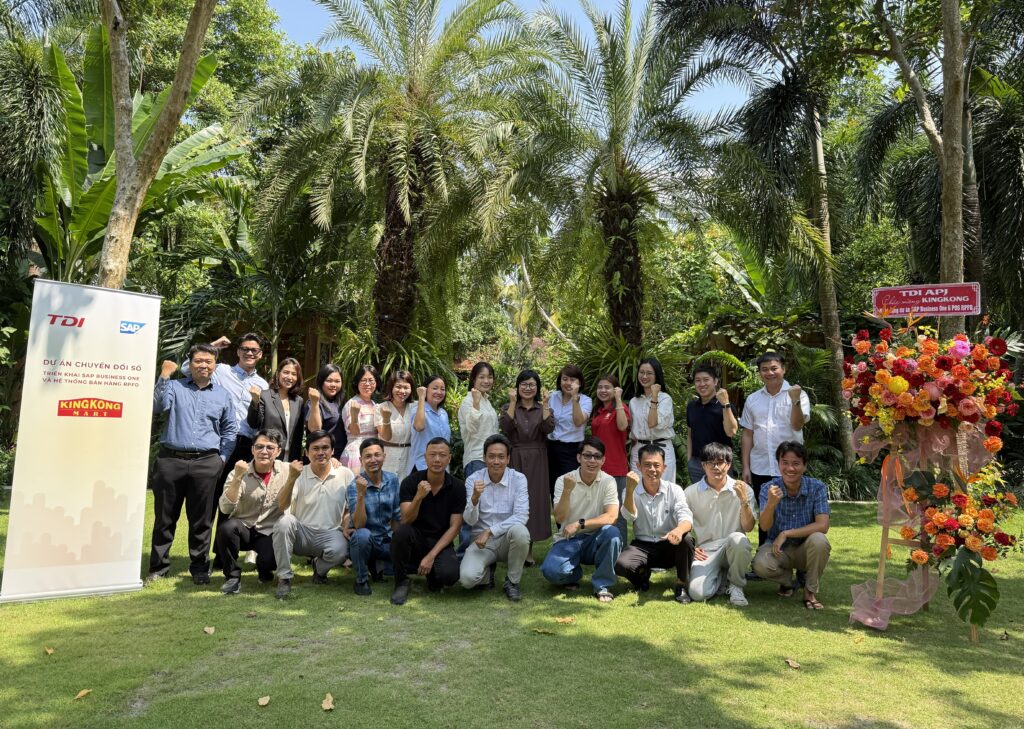
Empowering modern retail operations with an integrated ERP–POS foundation
A growing retail leader in Phu Quoc enters its next phase of transformation
TDI APJ is pleased to announce the project kick-off of SAP Business One integrated with RetailPlus Front Office (RPFO) for KINGKONG PQ COMPANY LIMITED, the operator of KingKong Mart – one of the most prominent grocery retail chains in Phu Quoc.
Operating under a modern retail model, KingKong Mart has established itself as a large-scale “one-stop shop” destination, serving both local residents and tourists. The supermarket offers a wide range of products, including FMCG, fresh food, fashion, and local specialties such as seafood, fish sauce, pepper, sim wine, and souvenirs.
With its continued expansion and increasing operational complexity, KingKong Mart is now taking the next step toward building a more structured and scalable retail foundation.
Key challenges in scaling modern retail operations
During the initial assessment phase, several operational challenges were identified:
- Custom-built systems developed for specific needs
- Lack of standardized business processes across operations
- Manual-heavy accounting and finance workflows
- Procurement and supply chain processes not fully optimized
- Limited management reporting and data visibility
These challenges are common among fast-growing retail businesses, especially when expansion outpaces system capabilities.
Why SAP Business One & RPFO: A fit-for-purpose ERP–POS strategy
To address these challenges, KingKong Mart selected SAP Business One integrated with RPFO, a solution designed to connect back-office ERP with front-line retail operations.
RetailPlus Front Office (RPFO), developed by TDI APJ, is a multi-segment POS platform that supports store operations, inventory, promotions, customer management, and analytics in a unified environment. When integrated with ERP, this approach enables:
- Real-time synchronization of sales, inventory, and financial data
- Centralized control across multiple stores
- Improved reporting and data-driven decision-making
- Seamless connection between online and offline channels (omnichannel retail)
Unlike standalone POS systems, RPFO acts as a core operational layer that grows with the business, supporting both daily operations and long-term expansion.
Why retailers choose TDI APJ as a SAP retail partner in Vietnam
As a trusted SAP retail partner in Vietnam, TDI APJ brings:
Deep retail industry expertise: Proven experience across supermarket, grocery, F&B, fashion, and multi-store retail environments.
Integrated ERP–POS solution approach: A unique capability to deliver end-to-end retail transformation, from SAP Business One to a purpose-built POS (RPFO), ensuring alignment between operations and finance.
Fit-to-standard implementation mindset: Focused on helping businesses adopt standardized, scalable processes, rather than over-customization that limits future growth.
Regional delivery capability: With presence across Vietnam, Singapore, and Malaysia, TDI APJ supports retailers in building consistent and scalable operations across markets.
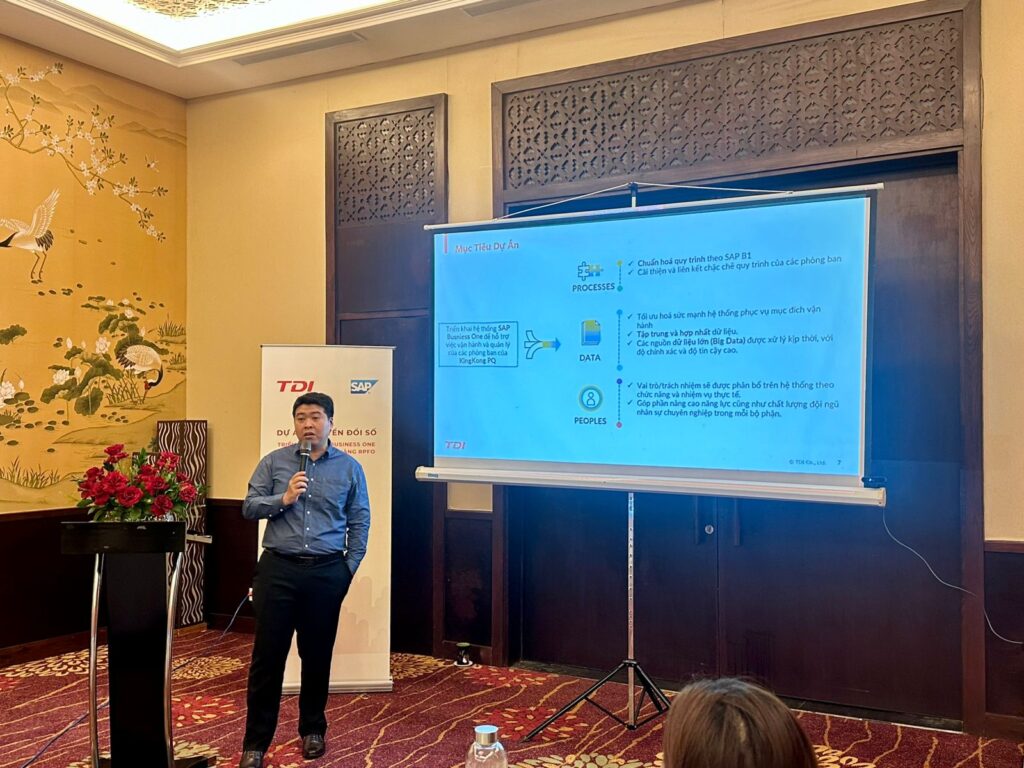
Project vision: Building a scalable retail foundation
As this is the project kick-off phase, the focus is on establishing a strong foundation rather than immediate transformation outcomes. The shared vision between KingKong Mart and TDI APJ includes:
- Standardizing core business processes
- Enhancing operational efficiency and visibility
- Creating a scalable system to support future growth
By aligning technology with business direction, the project aims to support KingKong Mart’s journey toward more structured, data-driven retail operations.
TDI APJ – Your SAP retail partner in Vietnam
Retail businesses today require more than just systems—they need integrated platforms that connect operations, finance, and customer experience. With SAP Business One and RPFO, TDI APJ helps retailers:
- Simplify complexity
- Improve control and visibility
- Scale confidently in competitive markets
Looking for a SAP retail partner in Vietnam to support your growth journey?
Contact TDI APJ to explore how an ERP–POS integrated solution can fit your business.
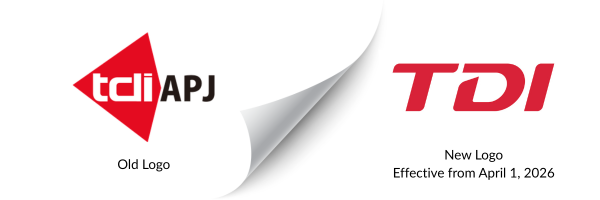
The new brand marks a new chapter for TDI and its Asia Pacific operations, reinforcing the company’s role as a trusted SAP partner and accelerating growth across Vietnam, Malaysia, Indonesia, and Singapore following a series of important milestones in SAP-led digital transformation projects.
To clarify, ‘TDI’ is our group brand name worldwide used for communication and presentation purposes, while ‘TDI APJ’ remains the legal entity name and continues to be used in all contracts and official documents.”
In recent years, TDI APJ has achieved several important milestones in collaboration with SAP, successfully delivering enterprise transformation projects and strengthening partnerships across the region. With growing demand for cloud ERP and digital transformation initiatives, TDI continues to expand its presence in Southeast Asia, supporting customers in Vietnam, Malaysia, Indonesia, and Singapore with advanced IT solutions and industry expertise.
Against this backdrop, TDI today announced the launch of its renewed brand identity, marking a significant milestone in the company’s evolution as a global IT solutions partner. The refreshed brand reflects TDI’s commitment to innovation, collaboration, and long-term value creation while reinforcing its core philosophy of “IT with Heart.”
The brand renewal is part of a group-wide initiative that began in 2024, aimed at reexamining TDI’s identity and strengthening the values that define the company. Through internal workshops, employee engagement, and feedback from customers and stakeholders, TDI developed a clearer articulation of its mission, vision, and brand concept to guide its future growth.
At the heart of the new brand identity is TDI’s belief that technology should not only address business challenges but also contribute to society and create meaningful value for the future. The philosophy “IT with Heart” represents the company’s commitment to combining advanced technical capabilities with sincerity, empathy, and responsibility in every project and partnership.
Strengthening TDI’s Role as a Trusted Technology Partner
The renewed brand introduces a modern visual identity and a clearer expression of TDI’s values and capabilities. It highlights the company’s ability to support customers throughout the entire digital transformation journey — from IT strategy planning and solution design to implementation, operation, and continuous improvement.
TDI’s strength lies in the combination of deep technical expertise, comprehensive project execution capabilities, and a strong partnership mindset. With teams of experienced engineers and consultants working collaboratively across markets, TDI delivers integrated IT solutions that address complex challenges and enable sustainable business growth.
A key concept that defines TDI’s approach is “NingenRyoku” — professionalism, integrity, and empathy. These values shape how TDI teams work with customers, ensuring that technology solutions are implemented not only effectively but also with a deep understanding of business needs and long-term impact.
Introducing Our New Corporate Logo and Tagline
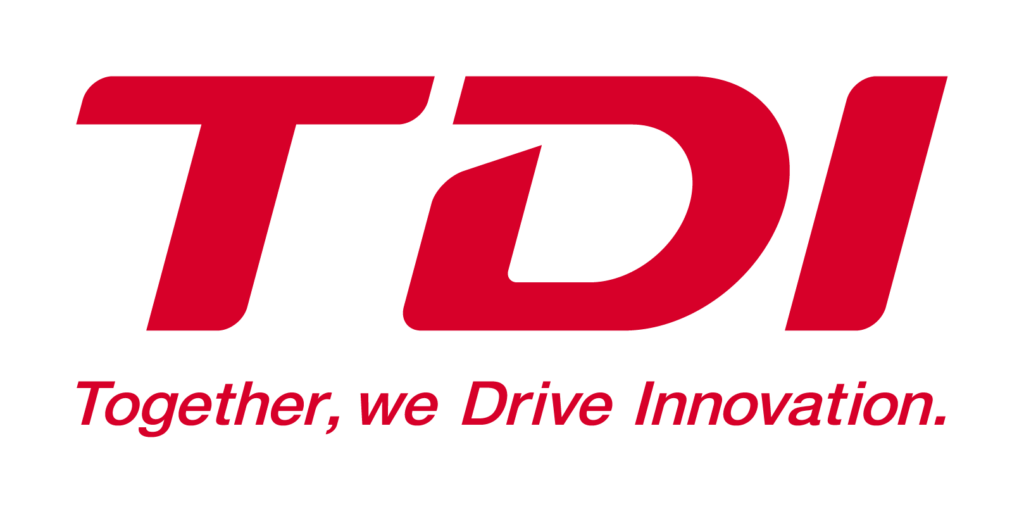
Corporate Logo:
The new corporate logo symbolizes the company’s strong determination to move into the next stage of development.
Its design combines a sense of stability with dynamic movement, reflecting the spirit of every employee to take on new challenges and work together with customers to shape the future.
Tagline:
Together, we Drive Innovation.
Within the initials “TDI,” the company conveys its commitment to working together with customers and partners (Together) to drive innovation (Drive Innovation).
Message from the CEO
Commenting on the brand renewal, Mr. Kazuo Hosoi, CEO of TDI APJ, said:
“Technology has become an essential foundation of modern society. As IT continues to evolve, the responsibility of technology companies to support businesses and society becomes even greater.
At TDI, we believe innovation must always be guided by human values. Our philosophy of ‘IT with Heart’ reflects our commitment to delivering technology with sincerity, responsibility, and empathy. By combining the collective wisdom of our engineers and consultants, we aim to create meaningful value for our customers and contribute to society.”
He added:
“This brand renewal is not simply a change in visual identity. It is a reaffirmation of who we are and how we move forward together with our customers and partners. As a trusted IT partner, TDI will continue to support digital transformation and help create ‘Value for the Future.’”
Expanding TDI’s Presence in Asia Pacific
Looking ahead, TDI APJ will continue to strengthen its presence in Southeast Asia, particularly in Vietnam, Malaysia, Indonesia, and Singapore, where demand for digital transformation and enterprise cloud solutions continues to grow.
By leveraging its strong collaboration with SAP and its expertise in enterprise solutions such as SAP S/4HANA Cloud, TDI aims to support organizations in accelerating their transformation journeys and achieving sustainable growth.
Through this renewed brand identity, TDI reaffirms its commitment to building long-term trust with customers, partners, and society — while continuing to deliver innovation and create value for the future.
About TDI
TDI is a global IT solutions company providing end-to-end services from IT strategy consulting and system development to implementation, operation, and maintenance. By bringing together diverse experts and advanced technologies, TDI works closely with customers to transform their businesses and create new value for society and the future.
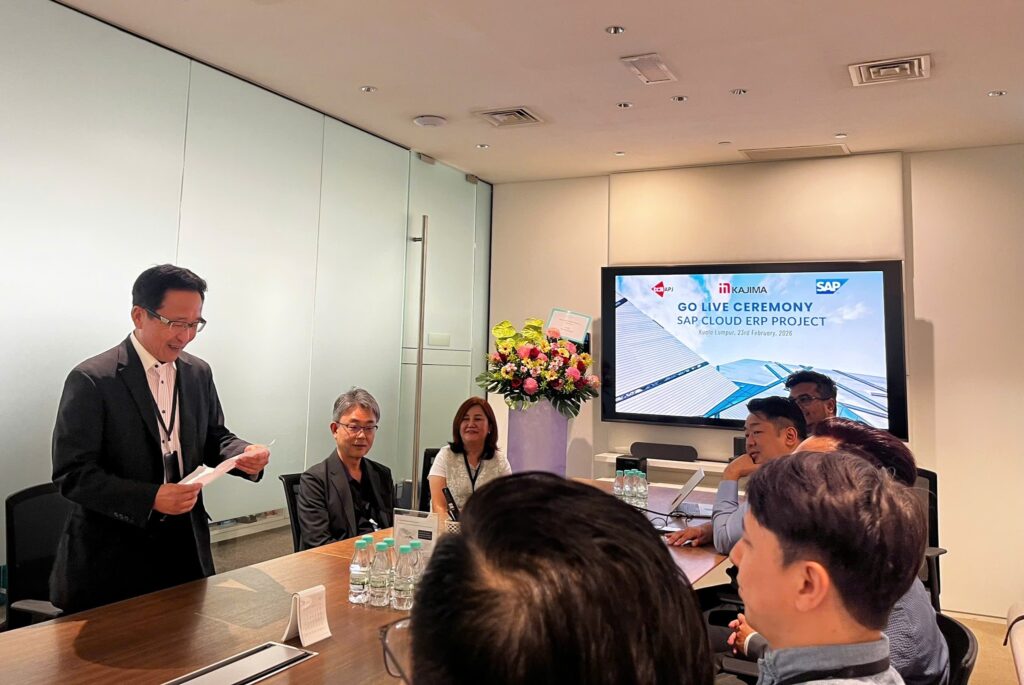
Advancing Financial Governance with a Modern Construction ERP in Malaysia
On 23 February 2026, Kajima Malaysia successfully went live with SAP S/4HANA Public Cloud, establishing a modern construction ERP platform in Malaysia designed to enhance financial transparency, governance, and real-time project visibility.
As part of Kajima Corporation, one of Japan’s leading engineering and construction groups, Kajima Malaysia required a digital foundation capable of supporting complex project environments while maintaining global reporting standards.
This go-live represents a strategic shift toward a fully integrated, cloud-based ERP system aligned with global best practices.
A Fully Integrated Construction ERP in Malaysia
The SAP S/4HANA Public Cloud implementation covers an integrated end-to-end scope across Finance, Procurement, and Sales operations, forming a unified digital core for Kajima Malaysia’s project-based business.
Finance (FICO) includes:
- General Ledger
- Accounts Payable
- Accounts Receivable
- Cash and Bank Management
- Asset Accounting
- Controlling
Additional modules include:
- Materials Management (MM) for procurement and material tracking across construction projects
- Sales and Distribution (SD) for sales processing and billing integration
By consolidating these core functions into a single cloud platform, Kajima Malaysia now operates on a unified real-time data environment. This eliminates fragmented reporting, reduces manual reconciliation, and strengthens financial transparency across construction projects in Malaysia.
Real-Time Visibility as a Strategic Control Mechanism
According to Mr. Tay Jun Yin, CFO of Kajima Malaysia, real-time visibility was the primary driver of the transformation.
“In today’s construction environment, real-time visibility is no longer optional. It is a critical control mechanism.”
He emphasized that real-time Earned Value Management indicators allow management to detect deviations early and intervene before risks escalate.
“If any outcome deviates beyond tolerance, we can intervene at Day 3 rather than Day 30. This preserves both profit and client trust.”
The new ERP platform also strengthens compliance, improves revenue recognition forecasting, enhances audit transparency, and supports stronger internal governance across projects.
Aligning Sites and Headquarters Through One Digital Core
Before implementation, reporting often relied on periodic submissions from project sites to headquarters. With SAP S/4HANA Public Cloud now live, both HQ and project teams access the same real-time dataset.
“Both sites and HQ are now looking at the same data, the same cost objects, and the same balances. This removes reporting latency and strengthens accountability.”
Automated transactional processes, including purchase order matching and inventory postings, allow finance teams to focus on analysis, forecasting, and strategic planning rather than manual processing.
The CFO described the new ERP system as “the central nervous system,” enabling headquarters to provide strategic direction while project sites maintain operational agility with full financial visibility.
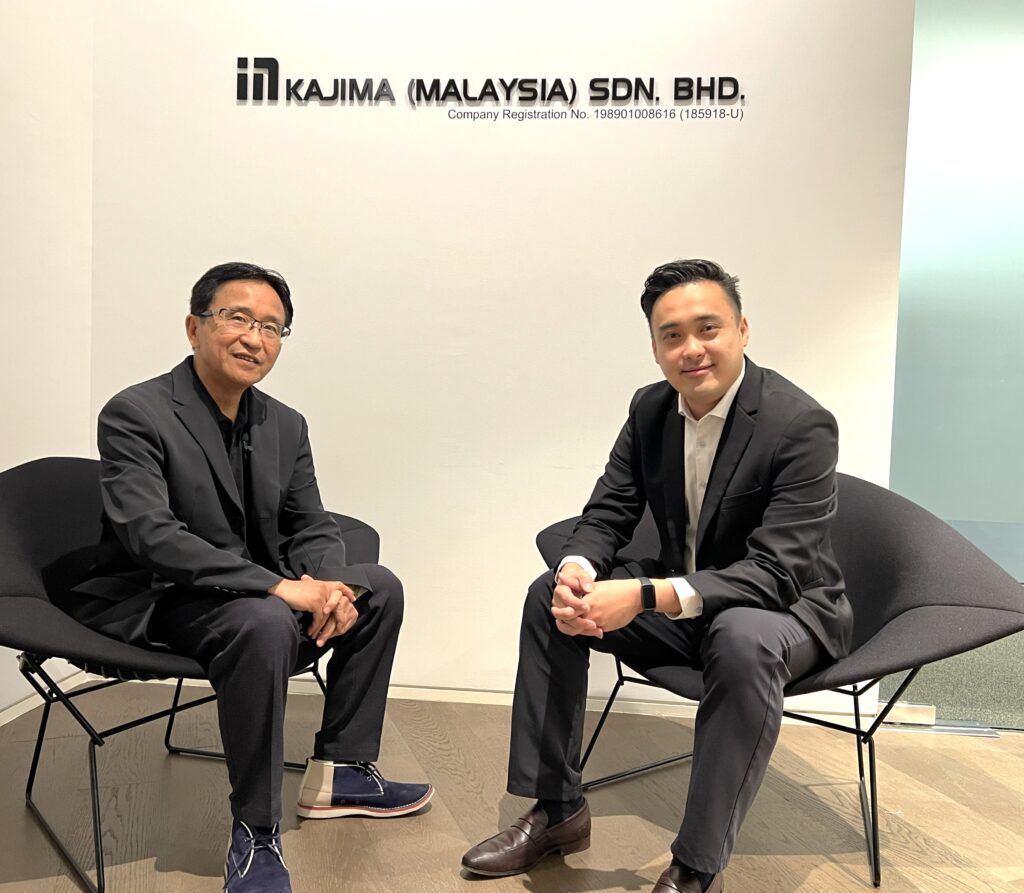
Execution Discipline and Governance
KT Chin, Managing Director of TDI APJ Malaysia, emphasized that the success of the SAP S/4HANA Public Cloud implementation was driven by structured governance, disciplined execution, and strong alignment between business and technical teams.
“In project-based industries like construction, clarity in scope and disciplined execution are critical. From day one, we ensured that business objectives were clearly translated into system design.”
He further noted that SAP Public Cloud encourages organizations to adopt standardized best practices rather than over-customization, strengthening long-term operational resilience and governance maturity.

A Strategic Foundation for Japanese Enterprises in Malaysia
Hosoi-san, CEO of TDI APJ, highlighted that Japanese enterprises operating across Southeast Asia increasingly require standardized, transparent ERP platforms to manage cross-border governance, regulatory complexity, and capital discipline.
SAP S/4HANA Public Cloud provides that unified digital foundation, aligning local execution with global reporting and compliance requirements.
For organizations exploring SAP S/4HANA Public Cloud, more information is available at:
https://www.sap.com/sea/products/erp/s4hana/trial.html
About Kajima Malaysia
Kajima Malaysia is a subsidiary of Kajima Corporation, one of Japan’s largest and most established construction and engineering companies with global operations.
The company has contributed to numerous landmark developments across Malaysia, delivering high-quality construction services with strong emphasis on safety, technical excellence, and long-term sustainability.
With the successful implementation of SAP S/4HANA Public Cloud, Kajima Malaysia further strengthens its governance framework and reinforces its position as a digitally enabled construction leader in Malaysia.
Yamaha Motor Parts Manufacturing Vietnam has officially launched a new cloud-based enterprise management system powered by SAP S/4HANA Public Cloud, marking a significant step in its digital transformation journey. Implemented by TDI APJ, a SAP partner in Vietnam, the project aims to enhance operational visibility, streamline processes, and build a strong digital platform to support sustainable growth.
TDI APJ, as a trusted SAP partner in Vietnam for manufacturing enterprises, applied a Fit-to-Standard approach aligned with Yamaha’s global ERP strategy. The implementation demonstrates how SAP S/4HANA Public Cloud is enabling manufacturers in Vietnam to modernize operations while maintaining global consistency.
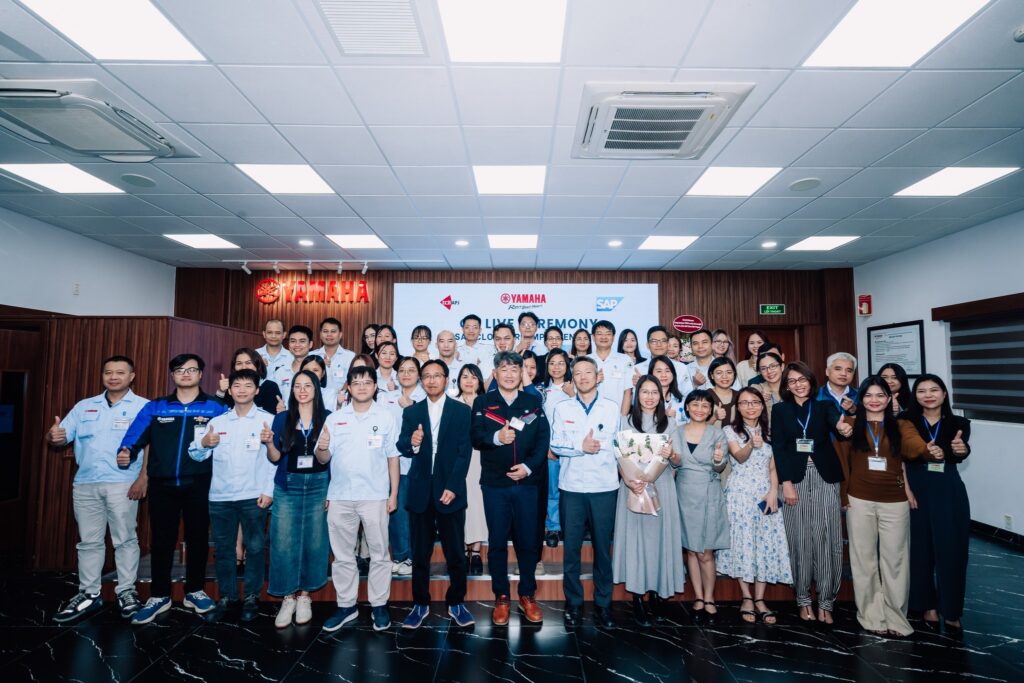
Yamaha Motor Parts Manufacturing Vietnam, TDI APJ, and SAP teams at the SAP S/4HANA Public Cloud Go-Live in Vietnam.
Building a Digital Backbone for Smart Manufacturing
Operating within increasingly dynamic global supply chains and rising production standards, Yamaha Motor Parts Manufacturing Vietnam recognized the need for a modern ERP foundation.
“As part of a global manufacturing group, we operate within increasingly complex and dynamic supply chains,” said Mr. Hashimoto Muneki, COO of YPMV. “Managing longer production cycles, multiple work-in-progress stages, and cross-functional coordination requires a digital foundation that provides real-time visibility, consistency, and agility. This project is a strategic step to strengthen our operational backbone and align with Yamaha Group’s direction toward smart manufacturing.”
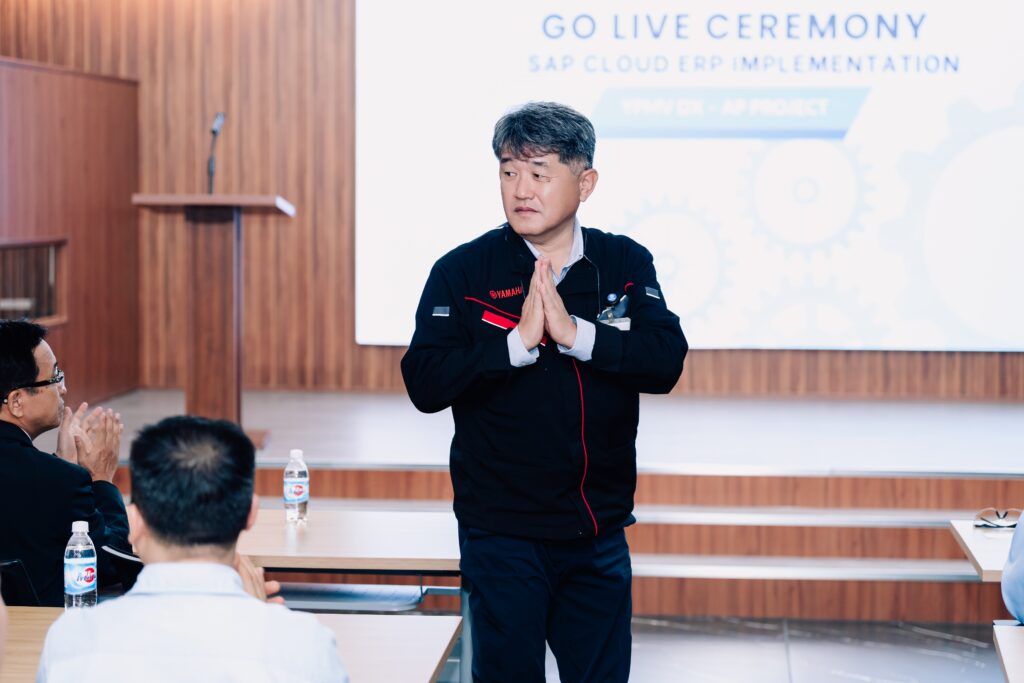
Mr. Hashimoto Muneki, COO of Yamaha Motor Parts Manufacturing Vietnam, speaking at the SAP S/4HANA Public Cloud Go-Live ceremony.
The new cloud-based system integrates Yamaha’s core operations – including finance, procurement, production, sales, quality, and warehouse management – into a single digital platform. Instead of relying on disconnected tools and manual consolidation, teams now work with one unified source of real-time data.
With SAP S/4HANA Public Cloud, Yamaha gains greater operational visibility, stronger financial control, and faster decision-making across departments. The scalable cloud platform also supports continuous updates and ensures alignment with Yamaha Group’s global standards, preparing the factory for future growth and evolving business demands.
Enabling Kaizen Through Digital Transparency
For Japanese manufacturers, continuous improvement—or Kaizen—remains a core philosophy.
“Kaizen requires transparency and accurate data,” Mr. Hashimoto added. “By standardizing processes and enabling real-time visibility, SAP Cloud ERP allows us to identify issues earlier, make faster adjustments, and continuously improve operations. Digitalization does not replace Kaizen – it strengthens it.”
The transition from Excel-based management and fragmented systems to a unified ERP platform significantly reduces operational risk, improves data accuracy, and enhances decision-making speed – critical factors for manufacturers operating at scale.
Delivered On Time & On Budget Through Fit-to-Standard
From TDI APJ’s perspective, this was a mission-critical project.
“Since Yamaha is a highly valued Japanese customer, this project allowed absolutely no margin for error,” said Mr. Kazuo Hosoi, CEO of TDI APJ. “We are very proud that we successfully navigated both the planning and implementation phases and achieved Go-Live strictly On Time & On Budget.”

Mr. Kazuo Hosoi (right), CEO of TDI APJ, in discussion with representatives of Yamaha Motor Parts Manufacturing Vietnam at the SAP S/4HANA Public Cloud Go-Live ceremony.
A key success factor was the strong commitment to the Fit-to-Standard principle.
“The leadership took a firm stance in rejecting unnecessary additional custom developments,” Mr. Hosoi explained. “The frontline teams fully embraced standardized best practices, which ultimately drove the project to a successful completion.”
This disciplined approach minimized complexity, accelerated deployment, and ensured long-term system sustainability.
A Distinctive Approach for Japanese Global Manufacturers
As a Japanese system integrator, TDI APJ brings deep understanding of Japanese manufacturing operations and governance culture.
Taking Yamaha’s case as an example, Mr. Hosoi highlighted two distinguishing factors:
- Robust master data design aligned with global standards
- Implementation deeply grounded in actual on-site operations
“Rather than relying 100% on automation, the project carefully considered real factory operations. Furthermore, the customer’s precise execution of the data migration plan was truly commendable,” he noted.
This balance between global standardization and practical shopfloor reality is often critical for Japanese manufacturers operating across multiple countries.
Strong Collaboration and Change Management
From the finance leadership perspective, the transformation required more than technology.
“The biggest challenge was not only the system itself but the change in mindset and ways of working,” shared Ms. Nguyen Thi Van, Chief Accountant of YPMV. “The success of the project came from strong commitment from leadership and close coordination between departments, together with the dedicated support of TDI APJ Vietnam.”
Following Go-Live, Yamaha aims to stabilize operations, continuously optimize processes, and maximize system value—laying the foundation for greater flexibility and readiness for future development.
Preparing for the Future of Manufacturing
As Yamaha globally moves toward new mobility models and higher flexibility, a scalable digital platform becomes essential.
“The shift toward new technologies and business models requires flexible planning and data-driven management,” Mr. Hashimoto emphasized. “SAP Cloud ERP provides a standardized platform that allows us to adapt quickly while maintaining global consistency.”
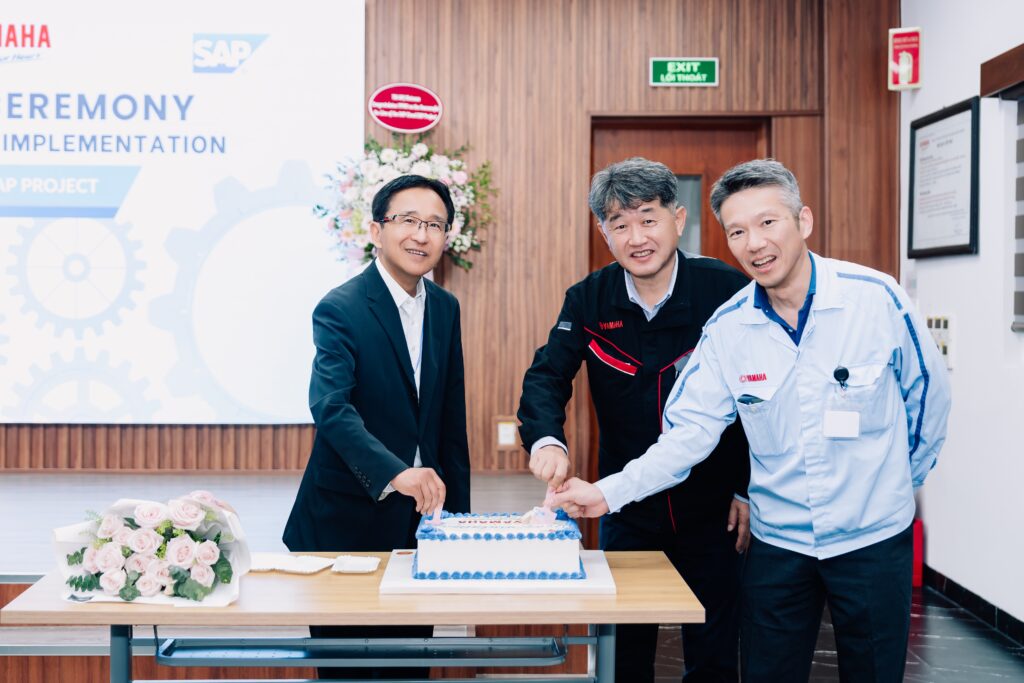
Representatives of TDI APJ and Yamaha Motor Parts Manufacturing Vietnam perform the cake-cutting ceremony at the SAP S/4HANA Public Cloud Go-Live event, marking the official launch of the new ERP system.
He added a message to fellow Japanese manufacturers:
“Digital transformation is no longer optional. Establishing a standardized, transparent ERP foundation is essential to sustain operational excellence and remain competitive. Starting early builds resilience for the future.”
With the successful SAP S/4HANA Public Cloud Go-Live in Vietnam, Yamaha Motor Parts Manufacturing Vietnam has laid a strong digital foundation for its next phase of growth. The project also reinforces TDI APJ’s role as a trusted SAP partner in Vietnam supporting Japanese manufacturers in building future-ready operations across the region.
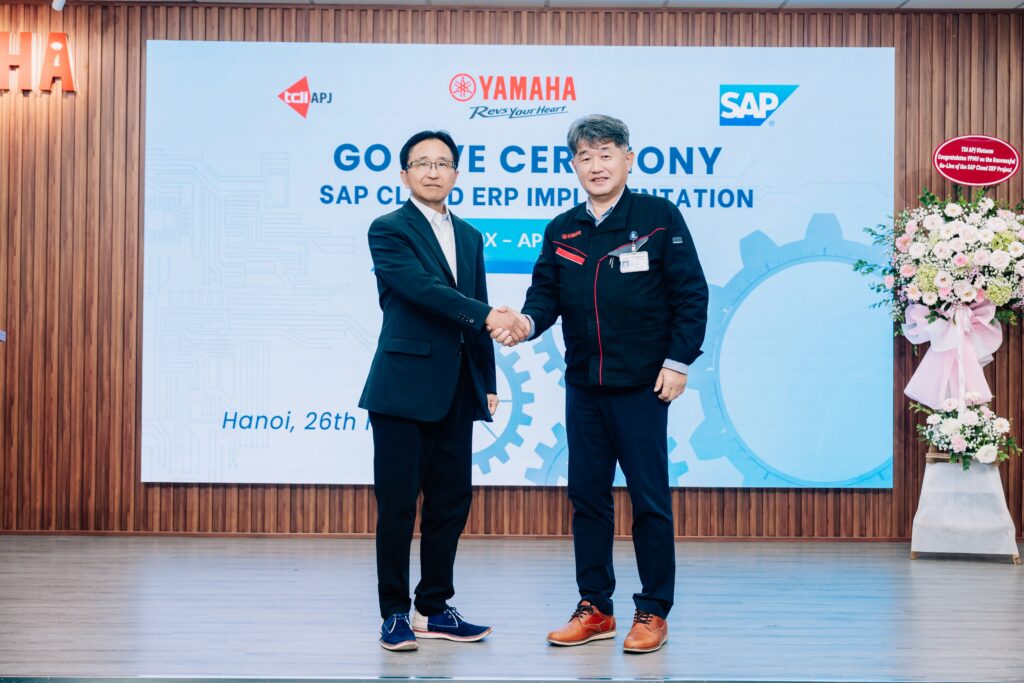
Leadership representatives from TDI APJ and Yamaha Motor Parts Manufacturing Vietnam mark the successful SAP S/4HANA Public Cloud Go-Live in Vietnam, symbolizing a strong partnership for smart manufacturing and digital transformation.
About TDI APJ
TDI APJ is a Japanese SAP implementation partner delivering digital transformation programs across Vietnam and the Asia-Pacific region. As a trusted SAP partner in Vietnam, TDI APJ specializes in SAP S/4HANA and manufacturing transformation, supporting enterprises in standardizing operations, strengthening governance, and building scalable, future-ready business platforms.
Combining deep industry expertise with disciplined project execution, TDI APJ is committed to delivering measurable business outcomes — ensuring projects are completed On Time, On Budget, and aligned with long-term strategic value.
An IDC Spotlight report, sponsored by SAP, on how a suite-first approach helps enterprises improve agility, productivity, and resilience in an uncertain business environment.
Today’s enterprise leaders are operating in an environment shaped by:
-
Economic volatility and global disruptions
-
Increasing complexity across systems and data
-
Rising pressure to adopt AI—without increasing risk or fragmentation
Many organizations are investing in AI, but without a unified foundation, the expected business impact often fails to materialize.
This IDC report explores why leading enterprises are shifting toward a suite-first strategy—integrating AI, data, and applications as one.
WHAT THIS REPORT COVERS
In this report, IDC examines:
-
Why fragmented systems limit speed, visibility, and innovation
-
How AI delivers real value only when powered by unified data and integrated applications
-
How a suite-first approach enables faster decisions and better cross-functional collaboration
-
What enterprise leaders should prioritize over the next 3–5 years
Based on IDC global research:
-
37% of organizations report more than 10% improvement in process productivity
-
39% achieve over 10% cost efficiency gains
-
35% experience faster innovation and speed to market
These outcomes are increasingly associated with organizations adopting AI-powered, integrated enterprise suites.
A suite-first approach brings together:
- AI embedded directly into enterprise processes
-
Unified data across SAP and non-SAP systems
-
Integrated applications that operate as one end-to-end platform
Instead of optimizing isolated functions, enterprises gain enterprise-wide visibility, speed, and decision intelligence.
Who should read this report?
This report is designed for:
-
CEOs and Managing Directors
-
CFOs and Finance Leaders
-
CIOs / CTOs and IT Leaders
-
Operations and Transformation Leaders
Industries: Retail, Manufacturing, FMCG
—————–
Complete the form below with the message “Leveraging the Collective Power of AI, Unified Data, and Applications in a Suite-First Approach” to receive the full IDC report and learn how leading enterprises are leveraging AI, unified data, and integrated applications to drive performance and resilience.